

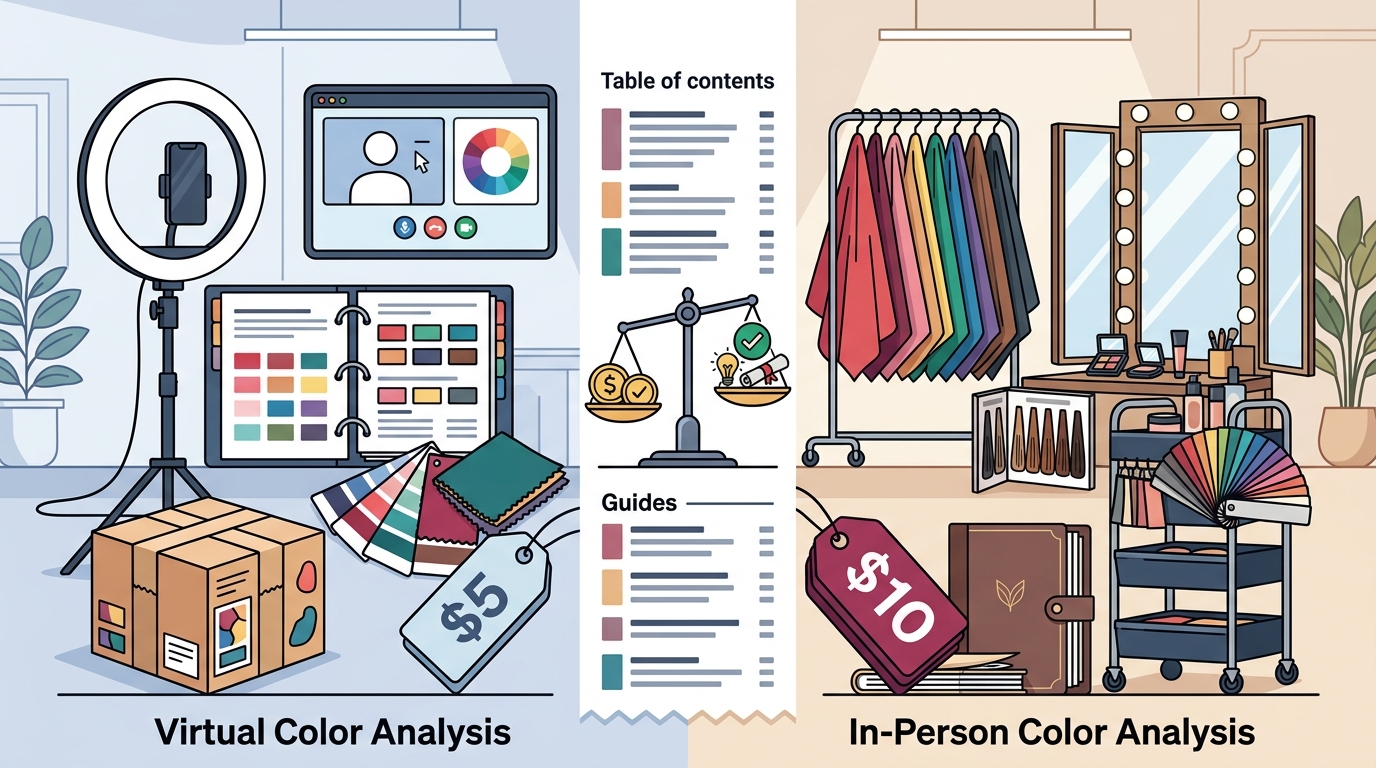
Virtual color analysis typically costs less than in-person sessions due to lower overhead, while in-person appointments command a premium for hands-on draping and immediate feedback. This guide breaks down the 2026 pricing landscape for both formats, explains the service delivery differences, and helps you choose the right option for your budget and goals. We will cover specific price ranges, what is included in each service, and how to maximize the value of your investment.
Virtual Color Analysis Pricing
Factors Influencing Virtual Cost
Several factors influence the final price of a virtual session. The complexity of the color system used is a major driver. Analysts using advanced systems like the 23-Season or 35-Palette systems often charge more than those using the traditional four-season model because the analysis requires deeper expertise and more detailed deliverables. The quality of the deliverables also matters. A service that includes a physical swatch book, a comprehensive digital guide, and a follow-up call will cost more than one that only provides a PDF palette. Finally, the analyst's experience and credentials play a role. Master-trained analysts with extensive client history may charge a premium for their specialized knowledge.
In-Person Color Analysis Pricing
Why In-Person Costs More
The higher price of in-person analysis reflects several operational costs. First, there is the cost of the physical space. Studios in high-cost-of-living areas like Austin, New York, or Los Angeles have higher rent, which is factored into the service price. Second, there is the time investment. In-person sessions require the analyst to be physically present for the entire duration, which limits the number of clients they can see in a day. Third, there are material costs. The studio must maintain a large inventory of high-quality drapes, swatches, and accessories, which adds to the overhead. Finally, the level of personalization is higher. The analyst can make real-time adjustments based on your immediate reactions and feedback, providing a more nuanced and accurate result.
Service Delivery Differences
Understanding the differences in service delivery is crucial for making an informed decision. Virtual and in-person analyses differ in accuracy, convenience, and the type of feedback you receive. Virtual analysis relies on the quality of your submitted photographs. Lighting, camera settings, and filters can affect the accuracy of the results. However, it offers unparalleled convenience, allowing you to get your analysis from anywhere in the world. In-person analysis provides a higher level of accuracy because the analyst can see your true colors without the distortion of digital screens. It also allows for immediate feedback and a more interactive experience. You can ask questions in real-time and see how different colors look on you instantly.
Accuracy and Reliability
Accuracy is the primary differentiator between the two formats. In-person draping is considered the most reliable method for determining your seasonal palette. The analyst can control the lighting and observe subtle nuances in your skin tone, hair depth, and eye color that may not be visible in photographs. Virtual analysis is highly accurate when high-quality photographs are provided, but it is subject to the limitations of digital imaging. If your photos are taken in poor lighting or with heavy filters, the results may be less precise. For this reason, many analysts recommend in-person analysis for those who want the highest level of certainty.
Convenience and Accessibility
Convenience is the primary advantage of virtual analysis. You do not need to travel to a studio, which saves time and money. This makes virtual analysis an excellent option for clients who live far from a color analysis studio or who have busy schedules. In-person analysis requires you to travel to the studio, which may involve commuting or flying. However, the in-person experience is often described as more immersive and enjoyable. Many clients appreciate the social aspect of the appointment and the opportunity to meet their analyst in person.
Virtual vs In-Person Comparison
The following table summarizes the key differences between virtual and in-person color analysis in 2026.
| Feature | Virtual Color Analysis | In-Person Color Analysis |
|---|---|---|
| Accuracy | High (dependent on photo quality) | Very High (controlled lighting) |
| Convenience | High (do it from home) | Low (requires travel) |
| Deliverables | Digital palette, app access, optional swatch book | Physical swatch book, digital guide, in-person feedback |
| Session Duration | 1-3 days (turnaround time) | 1-2 hours (in-studio) |
| Best For | Budget-conscious clients, remote locations | Clients seeking highest accuracy, social experience |
Key Takeaways
- In-person analysis offers higher accuracy due to controlled lighting and direct observation.
- Virtual analysis offers greater convenience and accessibility for remote clients.
- Advanced color systems like 23-Season or 35-Palette may command a higher price.
- Physical swatch books and digital app access are common deliverables in both formats.
- Choose in-person if accuracy is your top priority; choose virtual if convenience is key.
- Always check what is included in the price, such as follow-up calls or shopping guides.
Frequently Asked Questions
Is virtual color analysis as accurate as in-person?
Virtual analysis is highly accurate when high-quality photographs are provided, but in-person analysis is generally considered more reliable. In-person sessions allow the analyst to control lighting and observe subtle nuances that may not be visible in photos. If you are unsure about your photos, in-person is the safer choice for maximum accuracy.
What is included in a virtual color analysis?
A typical virtual color analysis includes a personalized seasonal palette, a digital guide, and access to a color app. Some services also include a physical swatch book shipped to your home and a follow-up video call. The specific inclusions vary by analyst, so it is important to check the details before booking.
How much does in-person color analysis cost in Austin?
Can I switch from virtual to in-person after my analysis?
Some analysts allow you to upgrade from a virtual to an in-person session by paying the difference. However, this policy varies by studio. It is best to ask the analyst about their upgrade policy before booking a virtual session. This can be a good option if you want to start with a lower-cost service and then decide if you want a more detailed in-person experience.
What is the 23-Season color system?
The 23-Season color system is an advanced personal color analysis method that expands on the traditional four-season model. It provides a more nuanced and specific palette for each individual, taking into account undertone, value, and intensity. This system is often used by master-trained analysts who want to provide highly personalized results.
Do I need to bring anything to an in-person session?
For an in-person session, you should arrive without makeup, tinted moisturizer, or colored contact lenses. This allows the analyst to see your natural coloring accurately. You may also want to bring a few neutral-colored clothing items to wear during the session, as this helps the analyst see how colors look against your skin.
How long does a virtual analysis take?
Virtual color analysis typically takes one to three business days to complete. The turnaround time depends on the analyst's workload and the complexity of the service. Some analysts offer expedited options for an additional fee. You will receive your results via email, usually including a digital palette and guide.
Is color analysis a one-time service?
Color analysis is generally a one-time service because your natural coloring does not change significantly over time. However, some analysts offer follow-up consultations or updates if you have significant changes in hair color or skin tone. Most clients find that their initial palette remains relevant for years.
Conclusion
Choosing between virtual and in-person color analysis depends on your budget, location, and priorities. Virtual analysis offers a cost-effective and convenient option, while in-person analysis provides the highest level of accuracy and a more immersive experience. By understanding the pricing and service differences, you can make an informed decision that fits your needs. For those seeking a premium, expert-led experience in Austin, in-person color analysis at ATX Color Studio offers advanced 23-Season and 35-Palette systems with a personalized approach. If you are located elsewhere, virtual color analysis is an excellent way to discover your palette from home. You can also explore all available services to find the right fit for your goals. To learn more about the analyst and their background, visit the about page. If you have questions, you can contact the studio directly.