

Your skin undertone is the subtle hue beneath the surface of your skin that remains constant regardless of sun exposure or tanning. It is the primary factor that determines which colors of clothing, makeup, and hair dye will harmonize with your natural features. Understanding whether your undertone is warm, cool, or neutral is the first step in building a wardrobe that supports your complexion rather than clashing with it. ATX Color Studio helps clients in Austin and worldwide identify these nuances through advanced professional draping and color theory.
The Science of Skin Undertones
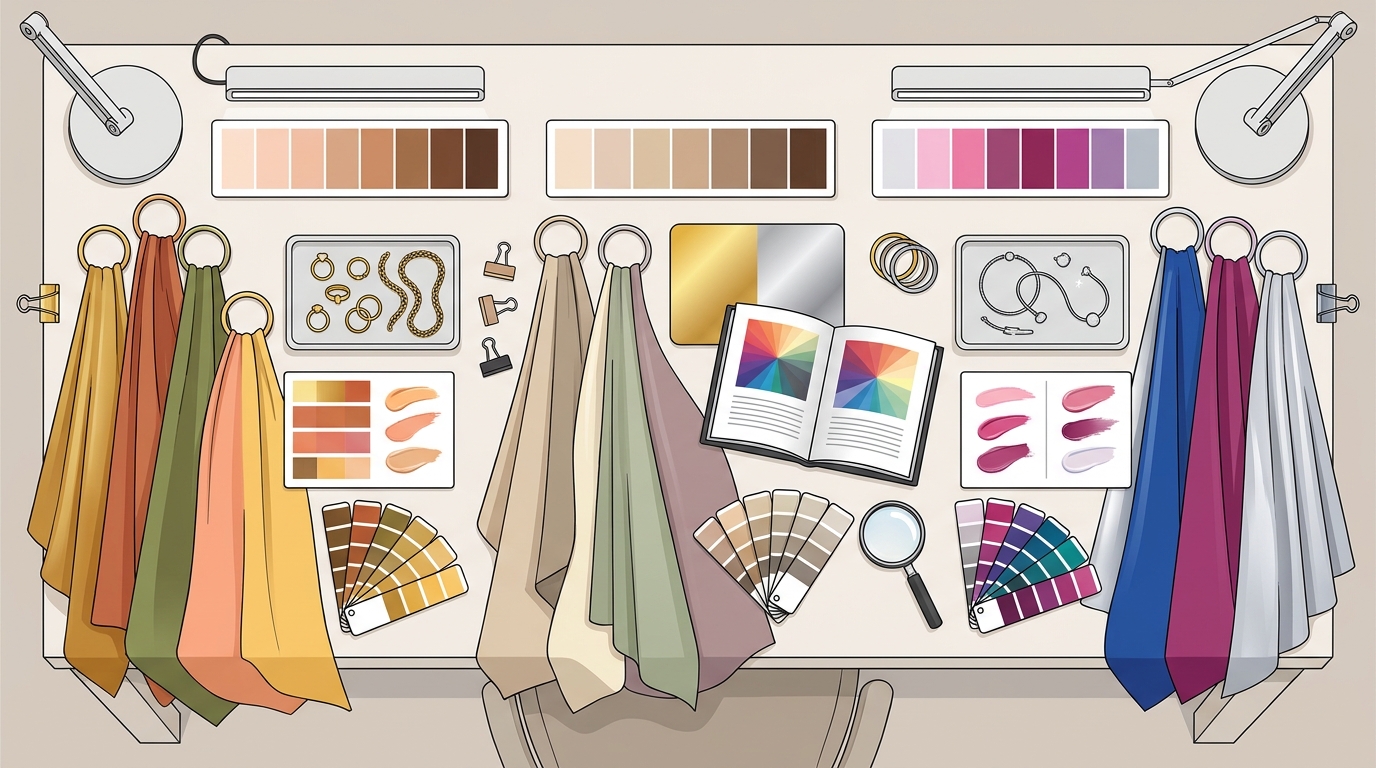
Undertone is distinct from skin tone, which refers to the lightness or darkness of your complexion. You can be fair, medium, or deep in skin tone and still have any of the three undertone categories. The three main categories are warm, cool, and neutral. Warm undertones feature yellow, peach, or golden hints. Cool undertones display pink, blue, or red hints. Neutral undertones are a balanced mix of both warm and cool hues.
Metals and pigments reflect light onto your skin. If the reflectiveness of a color or metal complements your undertone, it enhances your natural radiance. If it clashes, it can create shadows, dullness, or redness. This optical interaction is why a color that looks vibrant on one person may appear muddy on another. The goal of identifying your undertone is to understand how light interacts with your specific skin chemistry.
How to Test Your Undertone at Home
You can perform a simple mirror test to identify your undertone. Stand in natural daylight without wearing makeup. Hold a piece of yellow gold jewelry and a piece of silver jewelry next to your face. Observe which metal looks more harmonious with your skin. If gold looks better, you likely have a warm undertone. If silver looks better, you likely have a cool undertone. If both look equally good, you may have a neutral undertone.
Another method involves looking at the veins on the inside of your wrist. If your veins appear greenish, you likely have a warm undertone. If they appear blue or purple, you likely have a cool undertone. If they appear blue-green or it is difficult to tell, you likely have a neutral undertone. These home tests provide a general indication, but they are not always definitive. Lighting conditions and the specific pigments in your skin can sometimes make these visual cues ambiguous.
Warm Undertones: Characteristics and Best Colors
People with warm undertones often have hair that contains golden, red, or honey tones. Their eyes may be brown, amber, green, or hazel. They typically tan easily and burn less often in the sun. The best clothing colors for warm undertones include earth tones, warm neutrals, and rich jewel tones. Colors like olive green, rust, mustard, and warm reds tend to look vibrant on warm skin. For jewelry, yellow gold, bronze, and copper are the most flattering choices.
When selecting makeup, warm undertones look best with peachy or golden blushes and warm-toned lipsticks. Avoid colors that are too pink or blue-based, as these can make the skin look ashen. The key is to choose colors that share the same temperature as your skin. This creates a cohesive look that feels natural and polished.
Cool Undertones: Characteristics and Best Colors
Neutral Undertones: The Versatile Middle Ground
Neutral undertones are the most versatile because they can wear both warm and cool colors. People with neutral undertones often have a mix of warm and cool features. Their hair may be brown with golden or ash tones. Their eyes can be any color. They typically tan and burn in a balanced way. The best clothing colors for neutral undertones include soft pastels, warm neutrals, and muted jewel tones. Colors like soft yellow, lavender, and olive green work well. For jewelry, both gold and silver are flattering.
When styling, neutral undertones should consider contrast. Light neutral skin may pop more in silver, while medium to deep neutral skin often glows in soft gold. The key is to balance warm and cool elements in an outfit. This creates a harmonious look that feels authentic and polished. Neutral undertones have the most flexibility in their color choices.
Key Takeaways
- Undertone is the subtle hue beneath the skin surface, distinct from skin tone.
- Warm undertones have yellow, peach, or golden hints and suit gold jewelry.
- Cool undertones have pink, blue, or red hints and suit silver jewelry.
- Neutral undertones are a mix of warm and cool and suit both gold and silver.
- Home tests like the vein check and jewelry test provide general indications.
- Professional color analysis offers precise results using advanced draping techniques.
- Choosing colors that match your undertone enhances natural radiance and reduces dullness.
Frequently Asked Questions
Can my undertone change over time?
Your underlying undertone is determined by genetics and remains constant throughout your life. While your skin tone may change due to sun exposure, tanning, or aging, the fundamental warm, cool, or neutral hue beneath the surface does not change. This is why a color that flattered you in your twenties may still flatter you in your forties, even if your skin tone has darkened or lightened.
What if I have a mix of warm and cool features?
If you have a mix of warm and cool features, you likely have a neutral undertone. This is a common occurrence and does not mean you have an error in your analysis. Neutral undertones are a balanced mix of both temperatures. You can wear a wide range of colors, but you may find that certain shades look better than others. A professional analysis can help you identify the specific balance of warm and cool in your skin.
Does hair color affect my undertone?
No, hair color does not determine your skin undertone. Your skin undertone is independent of your hair color. You can have blonde hair with a cool undertone or dark hair with a warm undertone. When choosing hair color, it is important to consider your skin undertone to ensure the new color harmonizes with your complexion. A professional color analyst can help you choose a hair color that complements your skin.
Can I wear colors outside my palette?
Yes, you can wear colors outside your palette. Your seasonal color palette is a guide, not a list of rigid rules. You can still wear colors you love, but you may need to style them more intentionally. For example, if you have a cool undertone and love warm colors, you can wear them away from your face or pair them with cool neutrals. The goal is to create harmony, not to restrict your choices.
How accurate are online undertone quizzes?
Online undertone quizzes can provide a general indication, but they are not as accurate as a professional analysis. These quizzes often rely on self-reported information and static images, which can be affected by lighting, camera quality, and makeup. A professional color analysis uses advanced draping techniques and direct observation to provide precise results. If you want to be certain of your undertone, a professional session is the best option.
Find Your True Colors with ATX Color Studio
Identifying your undertone is the foundation of personal color analysis. While home tests can provide a starting point, a professional analysis offers the precision and detail needed to build a wardrobe that truly works for you. ATX Color Studio uses advanced 23-Season and 35-Palette systems to provide highly specific, individualized results. Whether you are in Austin or joining virtually, our master-trained analysts help you understand your unique color profile. To begin your journey, contact our team to schedule a consultation.