

Understanding your skin undertone is the foundation of personal color analysis. It determines which colors harmonize with your natural features and which ones clash. ATX Color Studio helps clients identify these subtle hues through professional assessment and education. Knowing your undertone removes the guesswork from your wardrobe and beauty routine.
1. The Vein Test
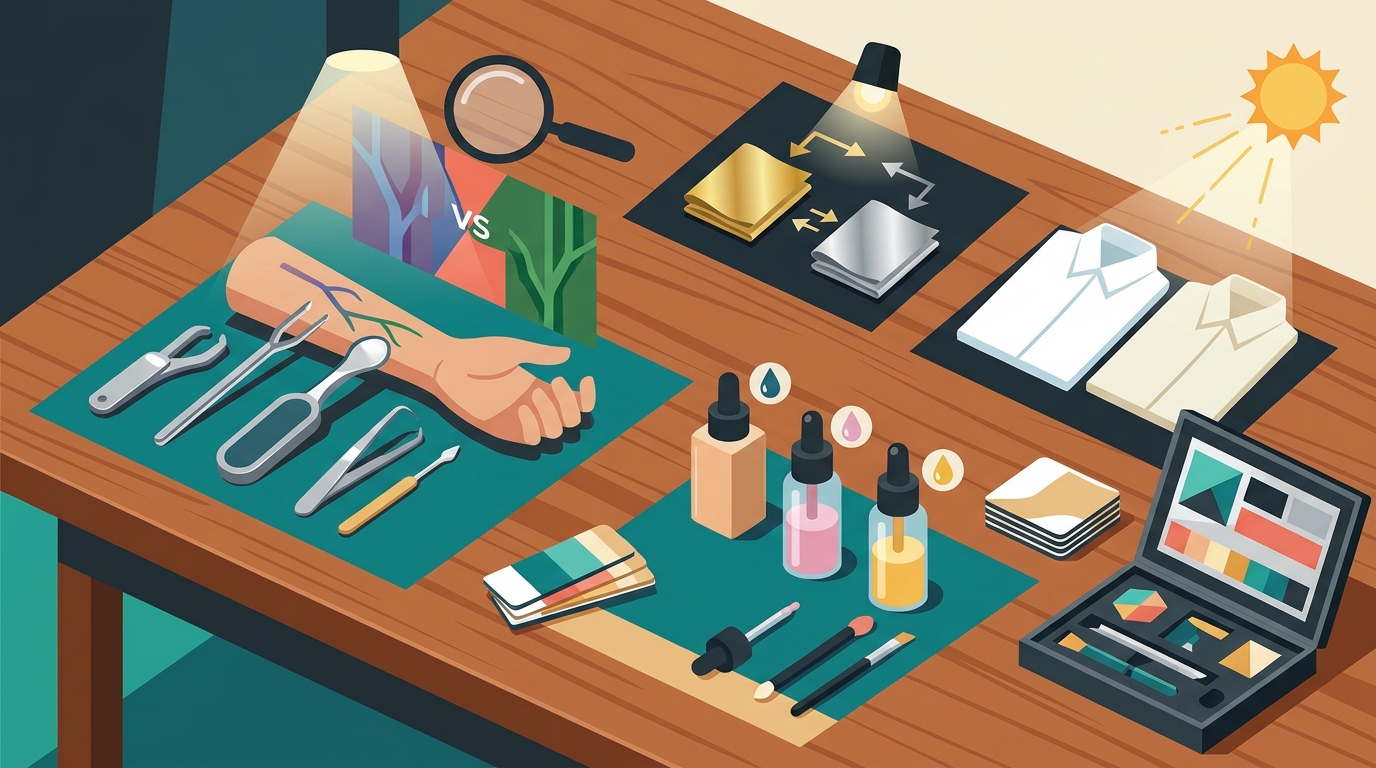
Look at the veins on the inside of your wrist under natural light. This is the most common DIY method for identifying undertones. If your veins appear blue or purple, you likely have a cool undertone. If they look green or olive, you probably have a warm undertone. If you see a mix of both or cannot clearly distinguish the color, you may have a neutral undertone.
2. The Jewelry Test
Compare how gold and silver jewelry looks against your skin. Hold a gold item and a silver item next to your face or wrist. If gold makes your skin look radiant and harmonious, you likely lean warm. If silver appears more flattering and bright, you likely lean cool. If both metals look equally good, you may have a neutral undertone. This method is effective because metals reflect light differently based on their color temperature.
3. The Sun Reaction Test
Observe how your skin reacts to prolonged sun exposure. People with cool undertones often burn easily and tan slowly. Those with warm undertones typically tan more readily and burn less often. Neutral undertones usually fall in between, burning slightly before tanning. While this is a general indicator, it is less precise than visual draping because melanin levels vary widely among individuals.
4. The Paper Test
Hold a plain white piece of paper next to your face in natural light. This method helps you see your skin tone without the distortion of makeup or lighting. If your skin looks pink or rosy against the white paper, you have a cool undertone. If it looks yellow, peachy, or golden, you have a warm undertone. If it looks like a mix or appears neutral, you likely have a neutral undertone. Ensure you are in a well-lit area with no colored lighting for accurate results.
5. The Lipstick Test
Apply a red lipstick and observe how it interacts with your skin. A true red lipstick can highlight your undertone. If the red looks vibrant and harmonious, you may have a cool undertone. If it looks too harsh or makes your skin look sallow, you may have a warm undertone. This test is subjective and depends on the specific shade of red used, so it is best used as a secondary check rather than the primary method.
6. The Eye and Hair Contrast Test
Assess the contrast between your skin, eyes, and hair. High contrast between your features often indicates a cool undertone, while low contrast suggests a warm one. However, this is not a definitive rule on its own. For example, a person with dark hair and light skin may have a cool undertone, but a person with dark hair and deep skin may have a warm undertone. This method works best when combined with the vein or jewelry tests.
7. Professional Color Analysis
Consult a certified color analyst for a precise, personalized assessment. DIY methods can be helpful, but they often lack the precision of professional draping. A professional analyst uses a full spectrum of color swatches to test against your skin, eyes, and hair in controlled lighting. This eliminates the guesswork and provides a definitive answer. ATX Color Studio offers in-person and virtual sessions to help you discover your exact seasonal palette.
Choosing the Right Method for You
If you are unsure which method to use, start with the vein and jewelry tests. These are quick and require no special tools. If you still feel uncertain, consider a professional color analysis. This ensures you receive accurate results and practical recommendations for your wardrobe and beauty routine. You can book an in-person session or try a virtual color analysis from anywhere in the world.
Frequently Asked Questions
Can my undertone change over time?
Your underlying skin undertone is determined by genetics and does not change. However, your skin tone may shift due to sun exposure, tanning, or seasonal changes. These temporary changes do not alter your core undertone.
What if I have a neutral undertone?
Neutral undertones are a mix of warm and cool hues. People with neutral undertones can typically wear both warm and cool colors. You may find that certain shades work better than others, but you have more flexibility than those with strong warm or cool undertones.
Is the vein test always accurate?
The vein test is a good starting point, but it is not always definitive. Lighting conditions and the visibility of veins can affect the results. It is best used in combination with other methods, such as the jewelry test, for a more accurate assessment.
Can I have different undertones in different parts of my body?
Your core undertone is consistent across your body. However, skin tone may vary slightly between your face, arms, and legs due to sun exposure. This variation does not change your overall undertone classification.
How does undertone differ from skin tone?
Skin tone refers to how light or dark your skin is, while undertone is the subtle hue beneath the surface. You can have a light, medium, or deep skin tone and still have a warm, cool, or neutral undertone. These are two separate characteristics that both influence your color palette.
Where can I get a professional color analysis?
You can schedule a session with ATX Color Studio for a precise assessment. We offer both in-person appointments in Austin and virtual sessions for clients worldwide. to learn more about booking your analysis.
Conclusion
Identifying your skin undertone is a valuable step in understanding your personal color palette. While DIY methods like the vein and jewelry tests can provide useful insights, professional analysis offers the most accurate results. ATX Color Studio is dedicated to helping you discover the colors that make you shine. Explore our services to find the right option for your needs.