

Choosing clothing colors that suit your skin tone starts with identifying your undertone, value, and intensity. ATX Color Studio helps clients in Austin and worldwide use advanced 23-Season and 35-Palette systems to find their most flattering hues. This guide covers how to identify your undertone and apply those findings to your daily wardrobe.
Undertone Identification
Understanding your skin's underlying hue is the first step in selecting flattering clothing. Undertone is the subtle color beneath the surface of your skin, which remains consistent regardless of your surface skin color. It is generally categorized as warm, cool, or neutral. Warm undertones have yellow, peach, or golden hints, while cool undertones feature pink, blue, or red hints. Neutral undertones are a balanced mix of both.
Why the Vein Test Is Unreliable
Many people rely on the vein test, where blue veins suggest cool undertones and green veins suggest warm undertones. This method is often inaccurate because vein visibility depends on lighting, skin thickness, and body temperature. Professional color analysis avoids these single-trick methods in favor of systematic comparison. By using drapes of various colors, an analyst can see how your skin reacts to different hues in real time. This visual comparison reveals your true undertone more accurately than any home test.
The Role of Value and Intensity
Undertone is only one part of the equation. Value is the lightness or darkness of your natural coloring, while Intensity is the saturation or brightness of your features. Two people with the same undertone can have very different seasons if their value and intensity differ. For example, a Light Spring has warm undertones but light value and soft intensity, while a Deep Autumn has warm undertones but deep value and high intensity. This is why a simple four-season system often lacks the precision needed for modern styling. Advanced systems like the 23-Season method account for these nuances, ensuring your palette is tailored to your specific combination of traits.
Common Factors That Affect Perception
Several external factors can make it difficult to identify your natural coloring at home. Makeup, tinted moisturizers, and self-tanners can shift the perceived warmth of your skin. Colored contact lenses and recent sun exposure also play a role. If you are considering a virtual color analysis, it is crucial to follow preparation instructions carefully. You should submit photos without makeup or filters to ensure the analyst can see your true features. This level of detail is what separates a professional assessment from a guess.
Practical Styling Application
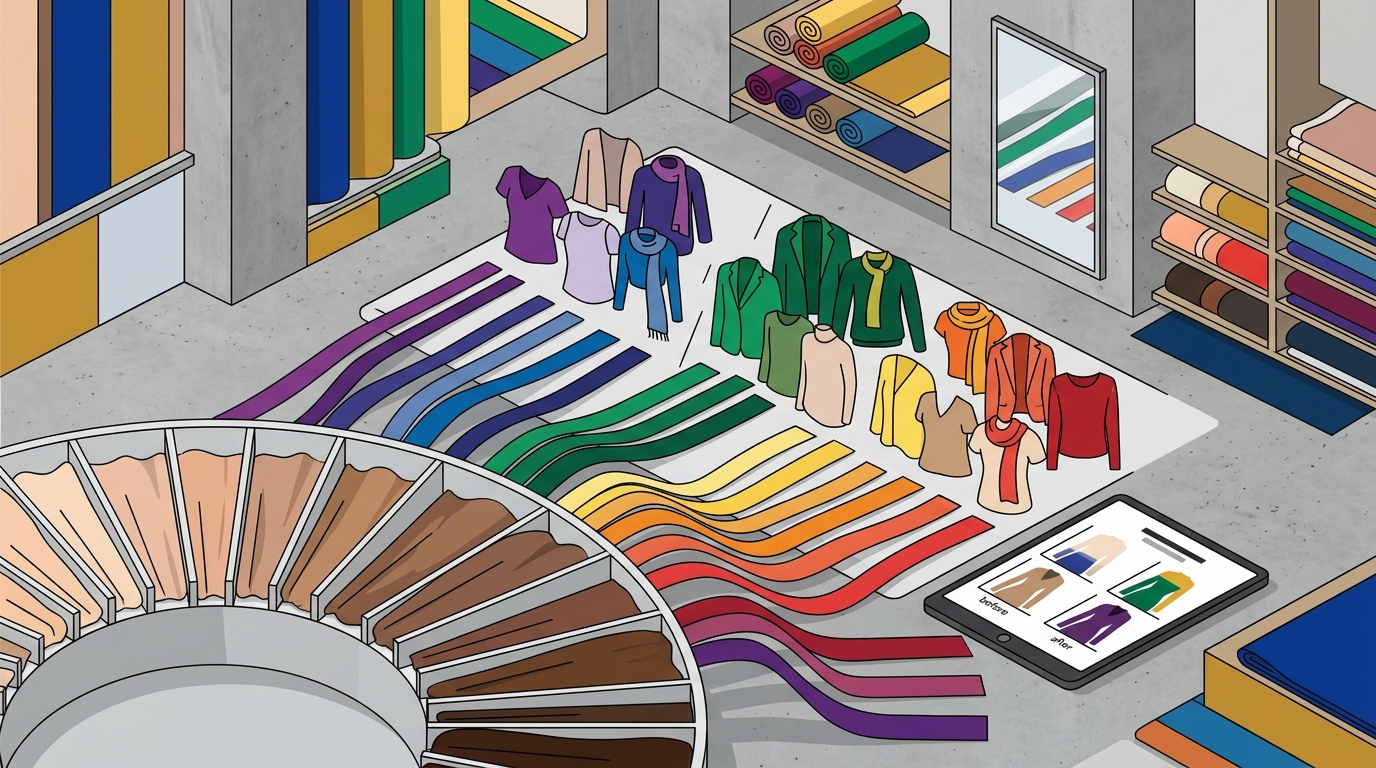
Once you know your season, the next step is applying those colors to your wardrobe. Your seasonal palette is a guide, not a rigid set of rules. It shows you which colors naturally support your undertone, value, and intensity. By focusing on these colors, you can build a cohesive wardrobe that works for you every day. This reduces the stress of getting dressed and minimizes the number of clothing returns.
Placement and Contrast
The most important rule in color styling is placement. Colors worn closest to your face have the greatest impact on your complexion. If a color is not in your best palette, you can still wear it by keeping it away from your face. For instance, if black is not in your palette, you can wear black pants or shoes while pairing them with a top in one of your best colors. This technique allows you to keep the pieces you love without letting them overpower your natural coloring. It is a simple adjustment that makes a significant difference in how balanced you look.
Choosing the Right Jewelry Metals
Jewelry is an extension of your color palette. The metal you choose should complement your undertone to enhance your natural radiance. Jewelry metal selection is a key part of practical styling because metals reflect light onto your skin. If you have a warm undertone, yellow gold, bronze, and copper will likely look harmonious. If you have a cool undertone, silver, platinum, and white gold are usually more flattering. Neutral undertones have the most versatility and can often wear both warm and cool metals. Choosing the right metal can make your eyes sparkle and give your skin a healthy glow.
Makeup and Hair Color Harmony
Your clothing colors should work in harmony with your makeup and hair. If your hair color is outside your palette, you can use makeup to bridge the gap. For example, if you have a cool undertone but warm hair, you might choose makeup shades that lean cool to balance the look. This creates a cohesive overall appearance. ATX Color Studio provides guidance on makeup and hair color direction to ensure all elements of your look work together. This holistic approach ensures that your style is consistent from head to toe.
| Undertone | Best Metals | Flattering Clothing Colors |
|---|---|---|
| Warm | Yellow Gold, Bronze, Copper | Earth tones, warm pastels, rich oranges |
| Cool | Silver, Platinum, White Gold | Jewel tones, icy pastels, crisp whites |
| Neutral | Soft Gold, Silver, Rose Gold | Soft neutrals, muted pastels, balanced hues |
Key Takeaways
- Undertone is the subtle hue beneath your skin and is the foundation of your color palette.
- The vein test is unreliable; professional draping provides a more accurate assessment.
- Value and intensity are just as important as undertone in determining your season.
- Placement matters: wear your best colors close to your face and less flattering colors below the waist.
- Jewelry metals should match your undertone to enhance your natural radiance.
- Your palette is a guide, not a rule; you can still wear colors outside your season with strategic styling.
- Makeup and hair color should be in harmony with your clothing for a cohesive look.
- Advanced systems like the 23-Season method offer more precision than basic four-season models.
Frequently Asked Questions
Can I wear black if it is not in my color palette?
Yes, you can still wear black. The key is placement. If black is not in your best palette, try wearing it below the waist, such as in pants or shoes. Pair it with a top in one of your best colors to keep the contrast away from your face. This allows you to enjoy the versatility of black without it overpowering your complexion.
How do I know if I have a warm or cool undertone?
The most accurate way to determine your undertone is through professional color analysis. While home tests like the vein check exist, they are often unreliable due to lighting and skin thickness. A professional analyst uses drapes to see how your skin reacts to different colors in real time. This systematic approach reveals your true undertone more accurately than any single trick.
Does color analysis mean I have to throw away my clothes?
No, color analysis is not about discarding your wardrobe. It is about understanding which colors are most flattering and how to style the rest. You can still wear pieces outside your palette by adjusting their placement or pairing them with better colors. The goal is to build a wardrobe that works for you, not to eliminate the clothes you love.
What is the difference between the 4-Season and 23-Season systems?
The 4-Season system is a basic model that categorizes people into Spring, Summer, Autumn, or Winter. The 23-Season system is an advanced method that breaks these down into more specific sub-seasons. This allows for a more precise analysis of your value and intensity. The 23-Season system provides a more tailored palette that reflects your unique combination of traits.
Can I do color analysis virtually?
Yes, virtual color analysis is a great option for those who cannot visit a studio in person. It involves submitting photographs and information about your natural coloring. The analyst then reviews these materials to determine your season. To ensure accuracy, you must follow preparation instructions carefully, including removing makeup and filters. This allows the analyst to see your true features clearly.
How does jewelry metal affect my look?
Jewelry metals reflect light onto your skin, which can either enhance or clash with your undertone. If you have a warm undertone, gold and bronze will likely look harmonious. If you have a cool undertone, silver and platinum are usually more flattering. Choosing the right metal can make your skin look more radiant and balanced.
What should I wear to my color analysis appointment?
You should arrive without makeup, tinted moisturizer, or colored contact lenses. Wear simple, solid-colored clothing that does not distract from your natural features. This allows the analyst to see your true coloring clearly. If you are unsure, you can check the preparation instructions provided by the studio. Following these guidelines ensures the most accurate results.
Is color analysis a science?
Color analysis is based on color theory and professional visual assessment. It is not a medical or scientific test, but rather an artistic and educational service. Different analysts may use different systems and methods, which can lead to slightly different results. However, the core principles of undertone, value, and intensity remain consistent across all professional approaches.
Conclusion
Choosing the right clothing colors is a skill that can be learned and refined. By understanding your undertone, value, and intensity, you can build a wardrobe that works for you every day. ATX Color Studio offers expert guidance to help you navigate this process with confidence. Whether you choose an in-person session in Austin or a virtual analysis from anywhere in the world, you will receive personalized tools and recommendations. To start your journey, to schedule your session.