

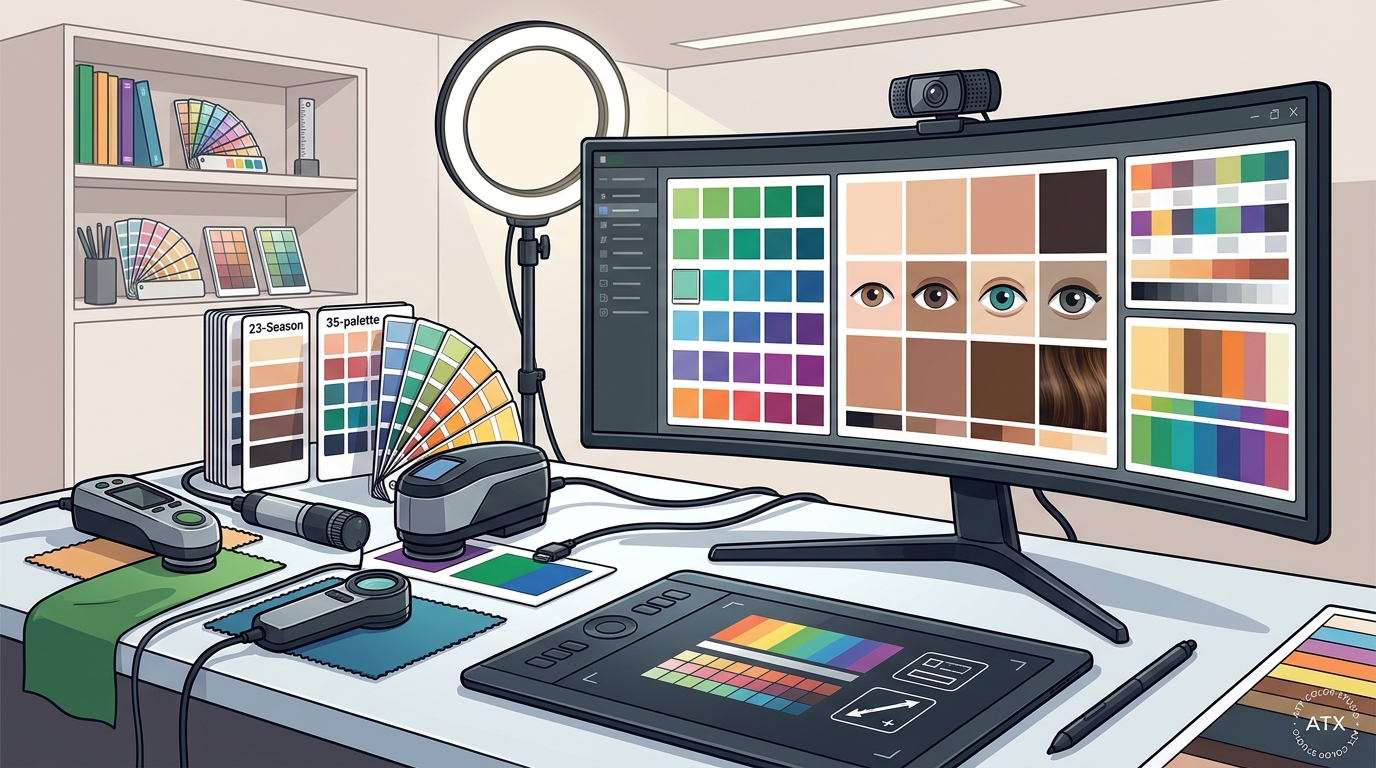
Seasonal color systems in virtual analysis work by using high-resolution photographs to evaluate your natural undertone, value, and intensity. Analysts compare your skin, hair, and eyes against digital color standards to determine your specific seasonal palette. This remote method allows for precise color matching without the need for physical fabric draping. At ATX Color Studio, we utilize advanced digital tools to ensure your virtual results are as accurate as an in-person session.
The Foundations of Seasonal Color Theory
Seasonal color analysis is a method of categorizing human coloring into specific groups based on three primary dimensions. These dimensions are undertone, value, and intensity. Understanding these core concepts is essential for interpreting any color analysis, whether performed in a studio or online.
In a virtual setting, the analyst must rely on photographic evidence to assess these dimensions. This requires careful attention to lighting and image quality. The goal is to see your true coloring without the distortion of filters or poor camera settings. This foundational step ensures that the subsequent palette selection is grounded in your actual appearance.
Traditional vs. Advanced Color Systems
Most people are familiar with the traditional four-season system, which divides individuals into Spring, Summer, Autumn, or Winter. This basic framework provides a general guide for color choices. However, it often lacks the nuance required for precise styling recommendations. Many clients find that the broad categories do not fully capture the complexity of their unique coloring.
The advantage of advanced systems in virtual analysis is the ability to refine the palette based on subtle differences. A digital analysis can highlight specific shades that complement your unique combination of value and intensity. This level of detail helps you build a wardrobe that feels authentic and cohesive. It moves beyond generic advice to provide a personalized color story.
The Virtual Analysis Process
Virtual color analysis relies on a structured submission of photographs. You are typically asked to provide images in natural light, without makeup, and with your hair pulled back. These photos allow the analyst to see your natural skin tone and feature contrast clearly. The quality of these images is critical to the accuracy of the final result.
Once the photos are received, the analyst performs a digital draping. This involves overlaying various color swatches onto your images to observe how they interact with your complexion. The analyst looks for signs of harmony, such as reduced redness, even skin tone, and brightened eyes. This digital process mimics the physical draping used in in-person sessions, allowing for a similar level of detail.
The virtual format also allows for a broader range of color testing. Analysts can quickly switch between different shades to find the perfect match. This efficiency is one of the key benefits of remote analysis. It ensures that you receive a comprehensive evaluation of your best colors, regardless of your location. The process is designed to be thorough and precise, providing you with a clear understanding of your palette.
Ensuring Accuracy in Remote Assessments
Accuracy in virtual color analysis depends heavily on the preparation of the client. Factors such as lighting, camera settings, and screen calibration can affect how colors appear in photographs. To mitigate these variables, analysts provide detailed instructions for taking your photos. Following these guidelines ensures that the images accurately represent your natural coloring.
Another factor in accuracy is the experience of the analyst. A trained professional knows how to interpret subtle changes in skin tone and feature contrast. They can distinguish between true undertones and temporary effects caused by lighting or environment. This expertise is crucial for providing a reliable result. At ATX Color Studio, our analysts are trained in advanced color systems to ensure high-quality assessments.
Applying Your Virtual Results
Once you receive your virtual color analysis, you will have a personalized palette to guide your shopping. This palette includes your best colors for clothing, makeup, and hair. You can use these colors to build a cohesive wardrobe that complements your natural features. The goal is to create a look that feels effortless and authentic.
Virtual results often come with digital guides or swatch cards that you can reference while shopping. These tools help you make informed decisions in stores or online. You can also use your palette to choose the right jewelry metals and accessories. For example, knowing your undertone can help you decide between gold and silver. This practical application makes the analysis a valuable long-term resource.
Using your palette does not mean you must discard items outside your colors. Instead, you can learn to style them in ways that minimize their impact. For instance, if black is not in your palette, you can wear it below the waist to keep it away from your face. This approach allows you to enjoy your existing wardrobe while incorporating your best colors. It is a flexible and practical way to use your analysis.
Key Takeaways
- Seasonal color systems categorize individuals based on undertone, value, and intensity.
- Advanced systems like the 23-season method provide more specific and nuanced palettes.
- Virtual analysis uses high-resolution photos to perform digital draping and color matching.
- Accurate virtual results depend on proper photo preparation and professional interpretation.
- Your palette serves as a practical guide for clothing, makeup, and accessory choices.
- Working with a trained analyst ensures a reliable and personalized color assessment.
Frequently Asked Questions
Is virtual color analysis as accurate as in-person?
Yes, when performed by a trained professional using high-quality photographs. The digital draping process allows for a detailed assessment of your coloring, similar to physical draping.
What photos do I need for a virtual analysis?
You typically need clear, natural light photos without makeup, with your hair pulled back. Specific instructions are usually provided to ensure the best results.
What is the difference between a 4-season and 23-season system?
The 4-season system is a broad categorization, while the 23-season system offers more specific sub-seasons for a more precise palette.
Can I still wear colors outside my palette?
Yes, you can wear colors outside your palette, but styling them away from your face can help maintain harmony with your natural coloring.
How do I use my palette for makeup?
Your palette includes recommended shades for foundation, blush, and eyeshadow that complement your undertone and feature intensity.
Do I need to throw away my current clothes?
No, you do not need to discard your clothes. You can continue wearing them while incorporating your best colors into your wardrobe.
Start Your Color Journey
Understanding how seasonal color systems work in virtual analysis empowers you to make informed styling decisions. By using advanced systems and professional digital tools, you can receive a precise and personalized palette. This guide helps you build a wardrobe that reflects your true self. If you are ready to discover your best colors, contact ATX Color Studio to schedule your virtual session.