
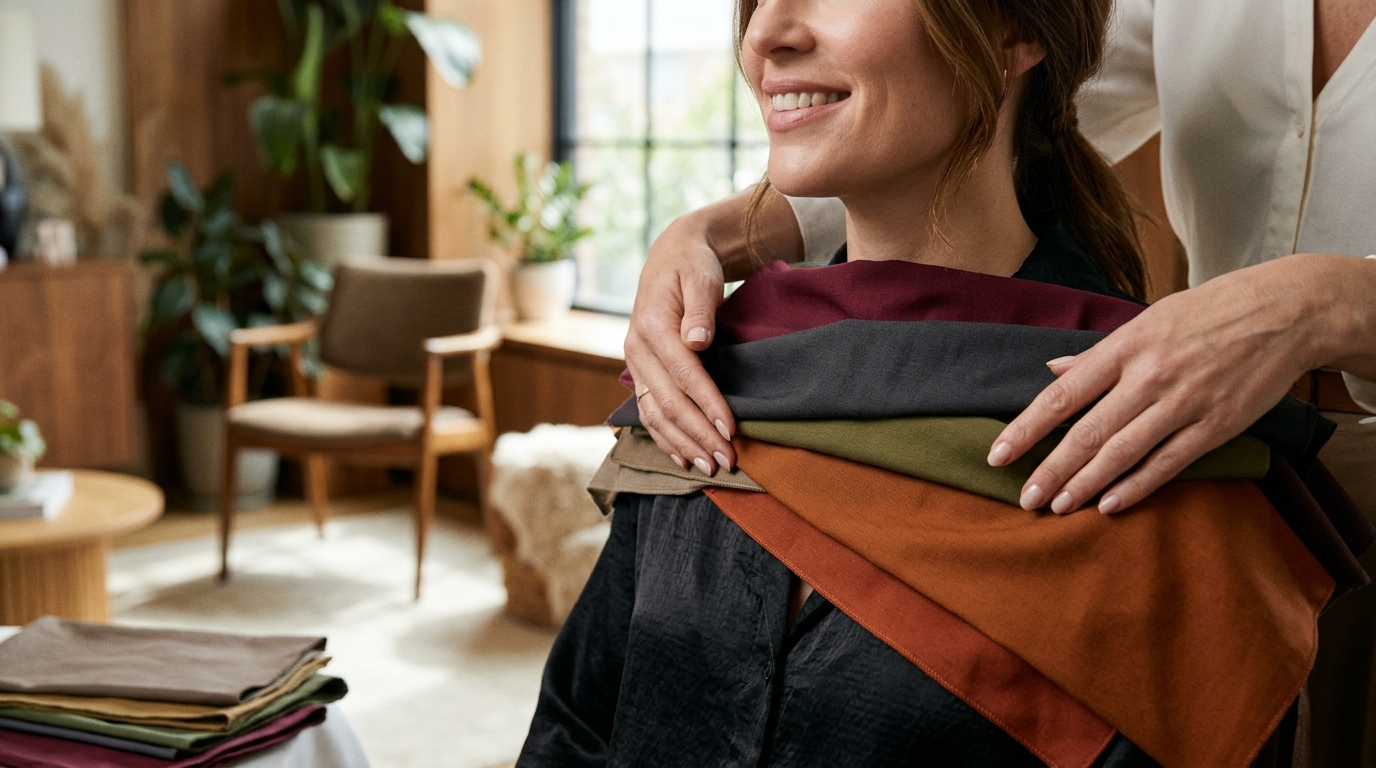
Professional draping is the process of placing physical color swatches against a client's skin, hair, and eyes to observe how specific hues interact with their natural coloring. This hands-on method allows analysts to evaluate undertone, depth, and contrast in real time. Unlike digital screens or static charts, draping provides immediate visual feedback that accounts for lighting and individual features. At ATX Color Studio, this technique forms the foundation of our 23-Season and 35-Palette systems, ensuring that recommendations are grounded in observable reality rather than guesswork.
The Science of Draping
Color analysis is a visual assessment method that relies on the interaction between light, pigment, and human features. Professional draping isolates these variables by using standardized fabric swatches. These swatches are designed to reflect light consistently, allowing the analyst to see how a color behaves against the client's complexion. This process helps identify whether a hue adds vibrancy or creates a dulling effect. The physical nature of the swatches ensures that the assessment is based on direct observation rather than theoretical assumptions.
Undertone and Contrast
Undertone is the subtle hue beneath the surface of the skin, typically categorized as warm, cool, or neutral. Draping reveals how different colors harmonize with this underlying tone. For example, a warm undertone may clash with a cool blue, causing the skin to appear sallow. Conversely, a cool undertone may look washed out against a warm orange. By testing multiple swatches, the analyst can pinpoint the specific balance of warmth and coolness that suits the client best. This level of detail is difficult to achieve through self-assessment or digital tools.
Lighting and Environmental Factors
Lighting is a critical variable in color analysis. Natural daylight provides the most accurate representation of how colors appear in real life. However, indoor lighting can distort hues, making a color look different than it does outdoors. Professional studios control their lighting environment to ensure consistency. This controlled setting allows the analyst to compare swatches under identical conditions. Without this control, results can vary significantly depending on the time of day or the type of bulb used. This is why in-person sessions at a dedicated studio often yield more reliable results than virtual assessments.
The Role of Professional Tools
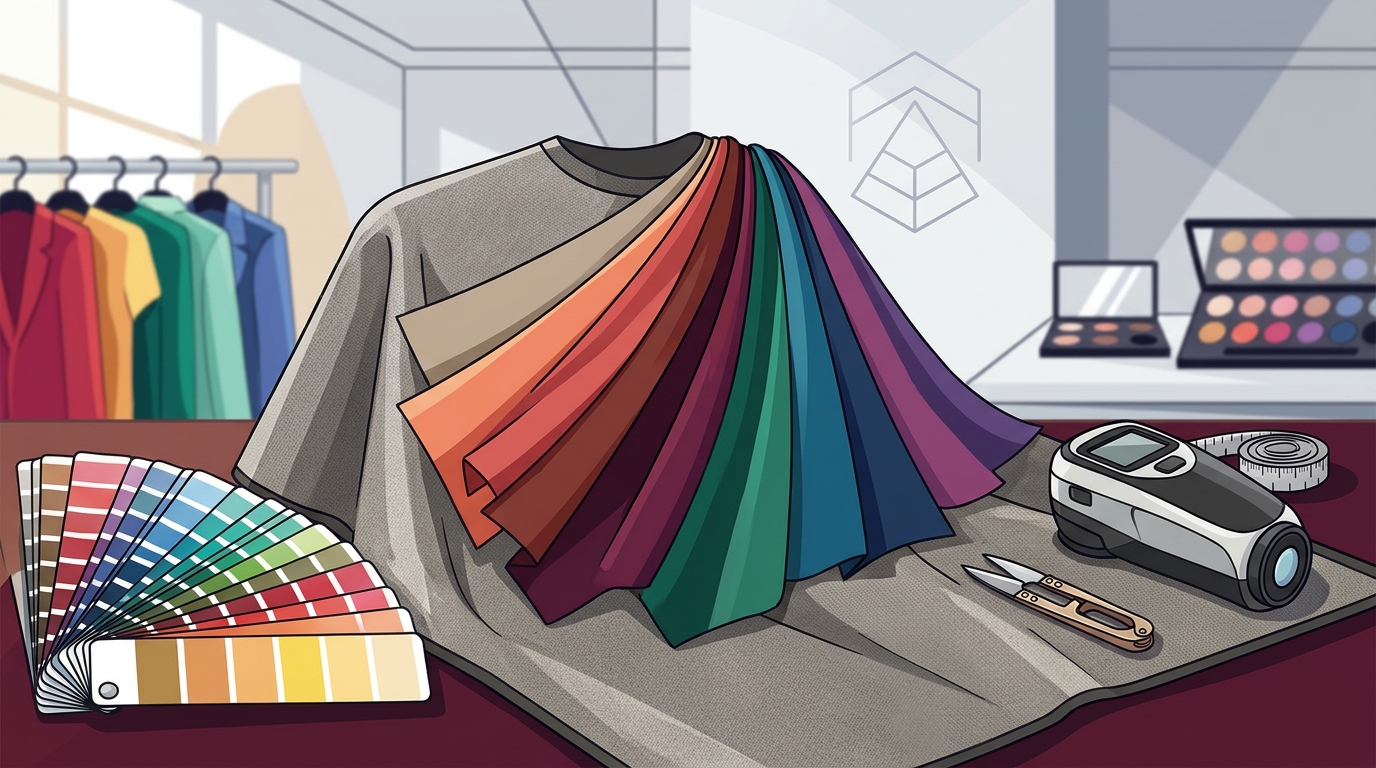
The 23-Season Approach
The 23-Season system is an advanced color analysis method that expands on the traditional four-season model. It provides a more granular classification of color types, allowing for highly specific recommendations. This system accounts for subtle differences in depth, intensity, and contrast that the four-season model may overlook. By using this advanced framework, analysts can identify a client's precise seasonal type. This precision is essential for creating a palette that truly flatters the individual. The 23-Season approach is particularly useful for clients who find that the standard four seasons do not fully capture their coloring.
Advanced 35-Palette Refinements
Some studios, including ATX Color Studio, utilize an advanced 35-Palette system for even greater specificity. This system refines the 23-Season model by adding additional layers of detail. It allows the analyst to distinguish between very similar color types that might otherwise be grouped together. This level of refinement ensures that the final palette is tailored to the client's unique features. It also provides a broader range of options for clothing, makeup, and hair color. The result is a more personalized and accurate analysis that reflects the client's true coloring.
Common Mistakes in Self-Analysis
Many people attempt to determine their color type using online quizzes or by holding up clothing in a mirror. While these methods can provide a starting point, they often lack the precision of professional draping. Online quizzes rely on self-reported information, which can be subjective and inaccurate. Holding up clothing in a mirror is affected by the quality of the fabric, the lighting, and the angle of reflection. These factors can lead to misleading results. Professional draping eliminates these variables by using standardized tools and controlled conditions. This ensures that the analysis is based on objective observation rather than subjective interpretation.
Why Virtual Analysis Has Limitations
Virtual color analysis is a convenient option for clients who cannot visit a studio in person. However, it has inherent limitations. The accuracy of a virtual analysis depends on the quality of the photographs submitted by the client. Lighting, camera settings, and image compression can all affect how colors appear in the photos. While a skilled analyst can still provide valuable insights through virtual means, the results may not be as precise as those from an in-person session. For the most accurate results, an in-person draping session is generally recommended. This allows the analyst to observe the client's coloring in real time and make adjustments as needed.
Key Takeaways
- Professional draping uses physical swatches to observe how colors interact with a client's natural features.
- Lighting and environmental conditions significantly impact the accuracy of color analysis.
- Self-analysis methods, such as online quizzes, often lack the objectivity and control of professional draping.
- In-person sessions provide the most reliable results due to controlled lighting and direct observation.
- Advanced color systems allow for highly specific recommendations tailored to individual coloring.
Frequently Asked Questions
What is professional draping in color analysis?
Professional draping is the process of placing standardized color swatches against a client's skin, hair, and eyes to assess how different hues interact with their natural coloring. This method allows analysts to evaluate undertone, depth, and contrast in real time.
Why is lighting important in color analysis?
Lighting affects how colors appear on the skin. Natural daylight provides the most accurate representation, while indoor lighting can distort hues. Professional studios control their lighting environment to ensure consistent and reliable results.
How does the 23-Season system differ from the four-season model?
The 23-Season system provides a more granular classification of color types, accounting for subtle differences in depth, intensity, and contrast. This allows for more specific and personalized recommendations compared to the broader four-season model.
Can virtual color analysis be as accurate as in-person sessions?
Virtual analysis can provide valuable insights, but its accuracy depends on the quality of the submitted photographs. In-person sessions are generally more reliable because they allow for direct observation under controlled lighting conditions.
What tools are used in professional draping?
Why is self-analysis often less accurate?
Self-analysis methods, such as online quizzes or holding up clothing in a mirror, are affected by subjective interpretation, lighting, and fabric quality. Professional draping eliminates these variables by using standardized tools and controlled conditions.
Experience Accurate Color Analysis in Austin
Discovering your true color palette requires precision and expertise. ATX Color Studio offers advanced, master-trained color analysis in Austin, Texas, using professional draping techniques to ensure accurate results. Whether you prefer an in-person session or a virtual consultation, our team is dedicated to helping you find the colors that suit you best. to schedule your session and take the first step toward a more personalized style.