

Yes, you can receive a professional color analysis entirely online. ATX Color Studio provides a virtual color analysis service that allows clients worldwide to discover their most flattering colors without traveling to Austin. This guide covers the specific photo quality requirements, the technical setup needed for accurate results, and how to prepare your home environment to ensure your virtual session matches the precision of an in-person appointment.
Photo Quality Requirements
Virtual color analysis relies entirely on the visual data you provide. Because the analyst cannot physically drape fabrics against your skin, the resolution and clarity of your photographs become the primary diagnostic tools. Photo quality is the single most critical factor in determining the accuracy of a remote assessment. If the image is blurry, compressed, or poorly lit, the analyst cannot accurately judge your undertone, value, or intensity.
Resolution and File Format
You should capture images in the highest resolution your device allows. JPEG files are generally acceptable, but they must be uncompressed. Avoid using images that have been resized by social media platforms or messaging apps, as these processes strip away the subtle color data needed for analysis. The file size should be large enough to allow the analyst to zoom in on your skin texture and hair roots without pixelation.
Camera Settings and Stability
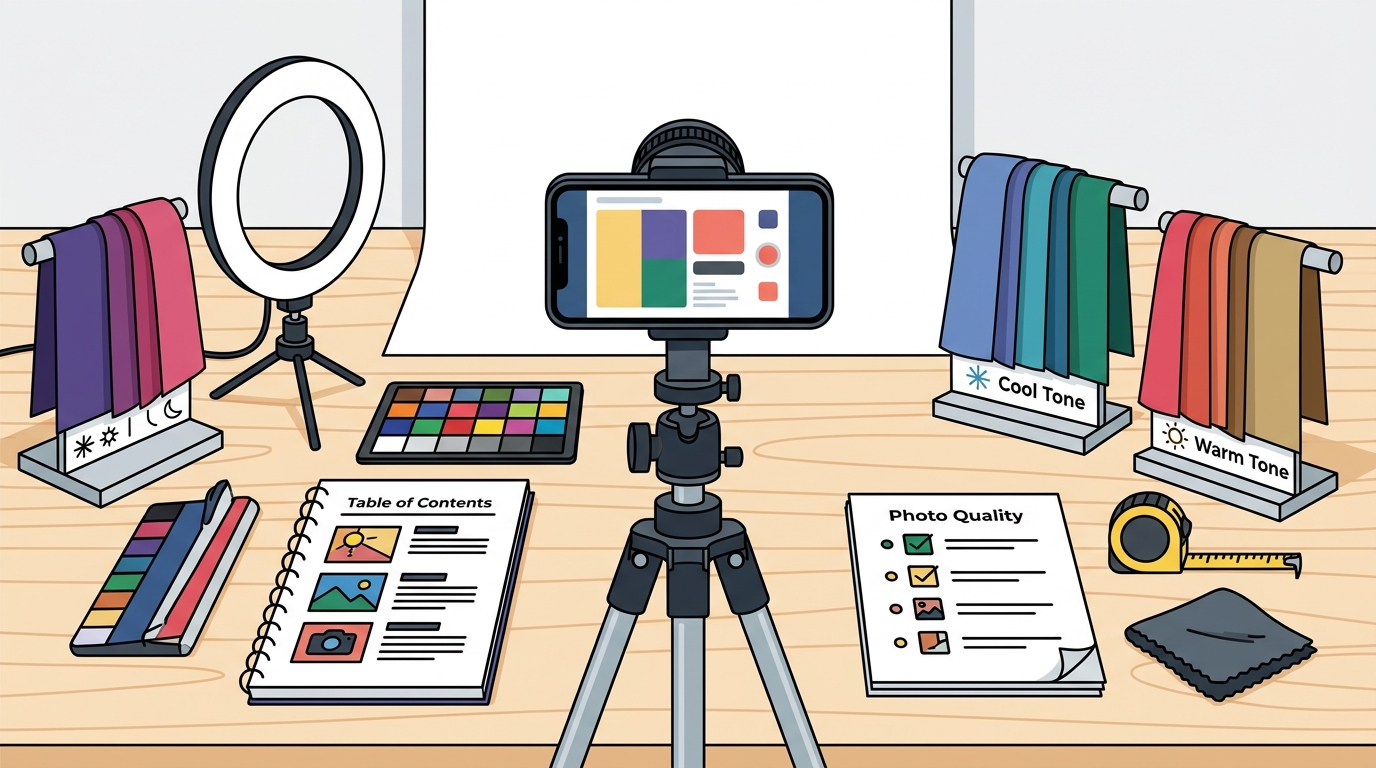
Use a modern smartphone or digital camera with a high-quality lens. Ensure the camera is stable during the shot. A tripod or a stable surface is highly recommended to prevent motion blur. If you are using a smartphone, disable any automatic beauty filters, skin smoothing, or color enhancement features. These algorithms alter the true color of your skin, which can lead to an incorrect seasonal determination.
Angle and Framing
Lighting and Environment Setup
Lighting is the second most important variable in virtual analysis. Lighting conditions can drastically shift the perceived color of your skin. Artificial light, especially from overhead studio lights or warm-toned bulbs, can add a yellow or orange cast to your complexion. This can mask cool undertones or exaggerate warm ones. To get an accurate reading, you must control your lighting environment.
Natural Light is Essential
The ideal lighting source is natural daylight. Position yourself facing a large window. Do not stand with the window behind you, as this will cast your face in shadow. Do not stand with the window to your side, as this creates uneven lighting across your face. The light should hit your face directly and evenly. Overcast days are often better than bright, sunny days because they provide soft, diffused light without harsh shadows.
Background Neutrality
The background of your photograph should be a neutral color. Avoid bright reds, blues, or yellows, as these colors can reflect onto your skin and alter its appearance. A plain white, light gray, or beige wall is ideal. Ensure there are no strong shadows cast by furniture or plants in the background. A clean, uncluttered background helps the analyst focus solely on your coloring.
Preparation Protocol
How you prepare your appearance before taking the photographs is just as important as the technical setup. Color analysis is based on your natural coloring, not your current cosmetic enhancements. Any product that alters the color of your skin, hair, or eyes must be removed or accounted for before the session begins.
Makeup and Skincare
You must take your photographs without any makeup. This includes foundation, concealer, blush, bronzer, and tinted moisturizers. Tinted sunscreens and self-tanners also alter your skin tone and should be avoided if possible. If you have recently used a self-tanner, you may need to wait until it has fully faded before scheduling your analysis. Your skin should be clean and dry, but not oily. Avoid applying heavy moisturizers immediately before the shoot, as they can create a sheen that affects color perception.
Hair and Eyes
Your hair should be in its natural color. If you have recently dyed your hair, you should note the date and the color used. If you wear colored contact lenses, you must remove them for the photographs. Your eyes should be their natural color. If you have any recent cosmetic procedures, such as laser treatments or chemical peels, you should inform your analyst, as these can temporarily change your skin's appearance.
Virtual vs. In-Person Comparison
While virtual analysis is a powerful tool, it differs from in-person sessions in specific ways. Understanding these differences helps you set realistic expectations and prepare accordingly. The table below summarizes the key distinctions between the two formats.
| Feature | Virtual Color Analysis | In-Person Color Analysis |
|---|---|---|
| Location | Anywhere with internet access | ATX Color Studio in Bee Cave, TX |
| Primary Tool | High-resolution photographs | Physical drapes and swatches |
| Lighting Control | Client-controlled (natural light required) | Studio-controlled (professional lighting) |
| Real-Time Feedback | Post-analysis review | Immediate visual feedback |
| Travel Requirement | None | Travel to Austin, TX |
| Best For | Clients outside the Austin area | Clients in the local area |
Virtual analysis is ideal for clients who live far from Austin or who prefer the convenience of a remote session. In-person analysis is best for those who want to see the drapes in real time and experience the immediate impact of colors on their complexion. Both methods use the same professional standards and color systems, ensuring that the results are consistent regardless of the format.
The Virtual Analysis Process
Once you have submitted your photographs, the analysis process begins. The analyst reviews your images to determine your undertone, value, and intensity. This involves a detailed comparison of your skin, hair, and eyes against a standardized color system. The analyst will look for subtle cues that indicate your seasonal direction. For example, the way light reflects off your skin can reveal whether your undertone is warm, cool, or neutral.
After the analysis is complete, you will receive a personalized report. This report includes your seasonal color palette, along with specific recommendations for clothing, makeup, and hair color. You will also receive guidance on how to use your colors in your daily life. The goal is to provide you with a practical tool that you can use to build a wardrobe that works for you. The process is designed to be educational, helping you understand why certain colors work and others do not.
Key Takeaways
- Virtual color analysis is a viable option for clients who cannot travel to Austin.
- Photo quality is the most critical factor in the accuracy of a remote assessment.
- Natural daylight is the preferred lighting source for virtual analysis.
- You must remove all makeup and colored contact lenses before taking photographs.
- The background of your photographs should be neutral and uncluttered.
- Virtual and in-person analyses use the same professional color systems.
- Preparation is key to ensuring that your results are accurate and useful.
Frequently Asked Questions
Can I get a professional color analysis done completely online?
Yes, ATX Color Studio offers a virtual color analysis service that allows you to receive a professional assessment from anywhere in the world. The service relies on high-quality photographs and a detailed review process to determine your seasonal color palette.
What kind of photos do I need to submit for a virtual analysis?
You need to submit high-resolution, front-facing photographs taken in natural daylight. The photos should show your face, neck, and upper chest. You must be without makeup and colored contact lenses. The background should be neutral and uncluttered.
Is virtual analysis as accurate as in-person analysis?
Virtual analysis can be highly accurate if the photographs are of high quality and taken in proper lighting. The analyst uses the same color systems and professional standards for both virtual and in-person sessions. However, in-person analysis allows for real-time draping, which can provide additional insights.
Do I need to be in Austin for a virtual analysis?
No, virtual analysis is designed for clients who are not located in Austin. You can participate from anywhere in the world as long as you have a reliable internet connection and a device capable of taking high-quality photographs.
What happens if my photos are not good enough?
If your photos are blurry, poorly lit, or do not meet the preparation requirements, the analyst may request that you retake them. It is important to follow the preparation instructions carefully to avoid delays in your analysis.
How long does the virtual analysis process take?
The timeline for a virtual analysis depends on the quality of the photos you submit and the analyst's schedule. Once your photos are approved, the analysis is typically completed within a few business days. You will receive your personalized report and recommendations after the analysis is complete.
Can I use my phone to take the photos?
Yes, you can use a modern smartphone to take your photos. Ensure that the camera is stable and that you are using the highest resolution setting available. Disable any beauty filters or color enhancement features. A tripod or stable surface is recommended to prevent motion blur.
What if I have recently dyed my hair?
If you have recently dyed your hair, you should note the date and the color used in your submission. The analyst will take this into account when determining your seasonal palette. If possible, it is best to wait until your hair has returned to its natural color, but this is not always necessary.
Conclusion
Getting a professional color analysis done completely online is not only possible but also highly effective when you follow the proper preparation and technical guidelines. By focusing on photo quality, lighting, and preparation, you can ensure that your virtual session provides accurate and useful results. ATX Color Studio is committed to helping you discover your most flattering colors, whether you are in Austin or across the globe. If you are ready to explore your personal color palette, we invite you to book your virtual color analysis today.