

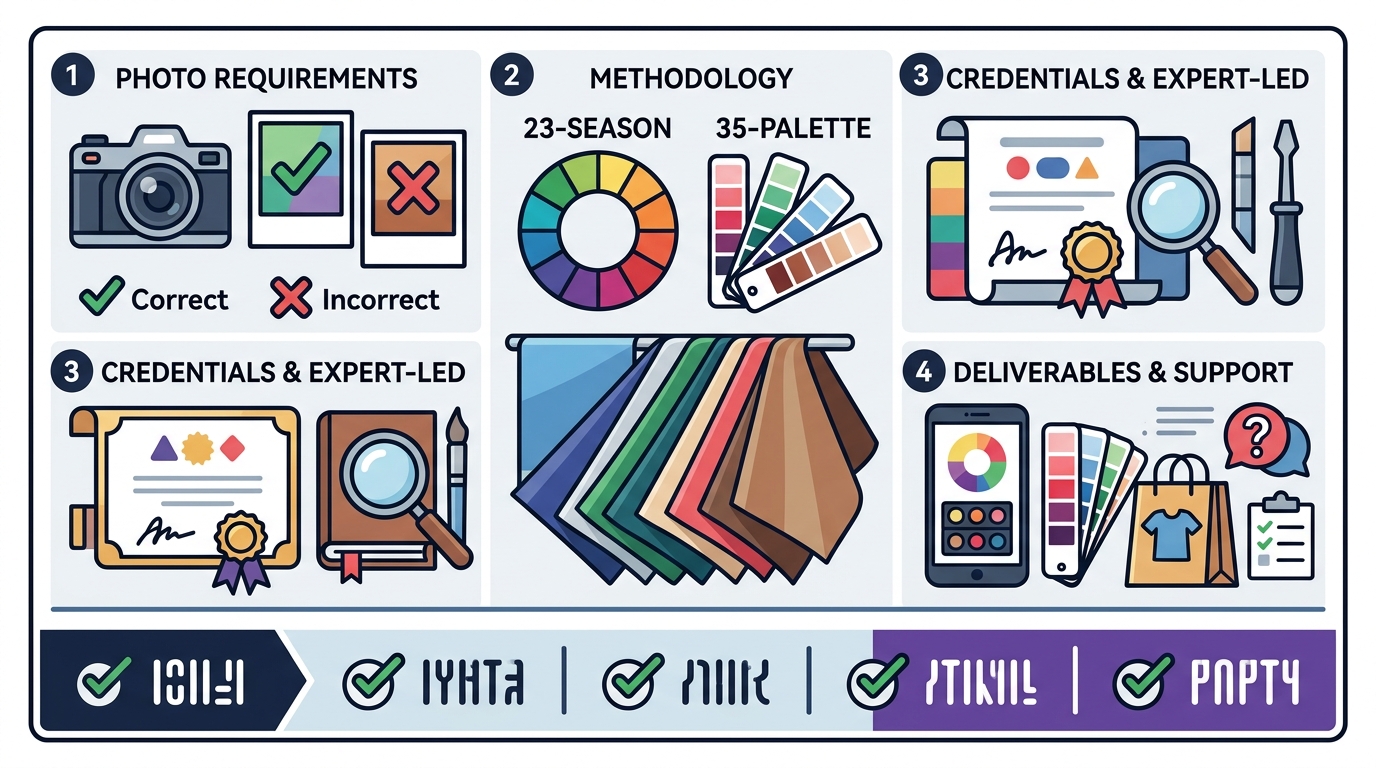
When choosing a virtual color analysis, you should look for a consultant who uses professional draping, advanced seasonal systems, and clear photo preparation guidelines. This guide covers the five critical factors that determine the accuracy and value of your online session. We will explore photo requirements, methodology, credentials, deliverables, and follow-up support to help you make an informed decision.
Photo Preparation Guidelines
Photo preparation is the foundation of any accurate virtual color analysis. Your consultant should provide detailed instructions on how to capture images that reflect your true coloring. This includes specific guidance on lighting, camera settings, and what to wear. Without proper preparation, the analysis may be skewed by filters, shadows, or incorrect white balance.
Lighting and Environment
Natural, diffused daylight is the gold standard for color analysis photos. You should avoid harsh overhead lighting, direct sunlight, or warm indoor bulbs that cast yellow or orange tones. The background should be neutral and uncluttered to prevent color reflection onto your skin. A plain white or light gray wall works best. Ensure there are no strong shadows on your face, as these can obscure undertone visibility.
Attire and Accessories
Wear a simple, solid-colored top that does not have patterns, logos, or heavy textures. A neutral color like white, black, or gray is ideal. Remove all jewelry, including necklaces and earrings, as metal reflections can interfere with skin tone assessment. Avoid wearing colored contact lenses, as they can alter the perceived color of your eyes and affect the overall analysis. Hair should be pulled back or styled away from your face to ensure clear visibility of your skin and hairline.
Makeup and Skincare
Arrive with a clean face, free of makeup, tinted moisturizers, or self-tanners. If you use tinted sunscreen, choose a clear or white option. Self-tanners and recent sun exposure can significantly alter your skin tone, leading to inaccurate results. If you have recently had cosmetic procedures or are using strong skincare products that change skin appearance, inform your consultant. This transparency helps them interpret the photos correctly.
Color Analysis Methodology
The methodology used by your consultant determines the depth and accuracy of your results. Not all color analysis systems are created equal. Some rely on basic four-season models, while others use advanced systems that account for subtle variations in undertone, value, and intensity. Understanding the methodology helps you set realistic expectations for your results.
Advanced Seasonal Systems
Modern color analysis often goes beyond the traditional Spring, Summer, Autumn, and Winter seasons. Advanced systems, such as the 23-Season or 35-Palette systems, provide more granular results. These systems consider factors like brightness, softness, and depth to create a highly personalized palette. For example, a True Spring has different optimal colors than a Light Spring, even though both fall under the broader Spring category. A consultant using an advanced system can identify these nuances, giving you a more precise guide for your wardrobe and beauty choices.
Professional Draping vs. Photo Analysis
While in-person draping is the most accurate method, virtual analysis relies on high-quality photographs and professional interpretation. A skilled virtual analyst will use digital tools to simulate draping, comparing your skin tone against various color swatches. They will assess how different colors interact with your undertone, looking for signs of harmony or clash. This process requires experience and a keen eye for detail. Look for a consultant who explains their process clearly and provides evidence-based reasoning for their recommendations.
Limitations of Virtual Analysis
It is important to understand that virtual color analysis is not a medical or scientific test. It is a professional interpretation based on visual observation. Factors like camera quality, screen calibration, and lighting conditions can affect the results. A reputable consultant will acknowledge these limitations and provide guidance on how to use your results in real life. They should also offer a disclaimer that results may vary based on individual preferences and environmental factors.
Consultant Credentials
Choosing a qualified consultant is crucial for receiving accurate and reliable results. Color analysis is a specialized skill that requires training and experience. Look for a consultant who has completed professional training in color analysis and has a track record of working with clients. Credentials can vary, so it is important to ask about their specific training and experience.
Training and Certification
Many color analysts complete training programs offered by recognized institutions or independent experts. Look for a consultant who has completed a comprehensive course that covers color theory, seasonal systems, and practical application. Some analysts are double-master trained, meaning they have completed advanced training in multiple systems. This level of training ensures they can handle complex cases and provide nuanced recommendations. Ask about their training background and any certifications they hold.
Experience and Portfolio
Experience matters in color analysis. A consultant who has analyzed hundreds of clients will have a deeper understanding of how different colors interact with various skin tones and features. Look for a consultant with a substantial portfolio of past work. They should be able to share examples of their analysis process and the results they have achieved for clients. A strong portfolio demonstrates their ability to provide consistent and high-quality results.
Professional Reputation
Check for reviews and testimonials from past clients. Look for feedback that mentions the consultant’s professionalism, communication skills, and the practicality of their recommendations. A reputable consultant will have a positive reputation in the color analysis community. They should be transparent about their methods and willing to answer your questions. Avoid consultants who make unrealistic promises or guarantee specific outcomes. Color analysis is a personalized service, and results can vary based on individual factors.
Personalized Deliverables
The deliverables you receive after your virtual color analysis are just as important as the analysis itself. These materials provide you with a practical guide for using your colors in everyday life. Look for a consultant who offers comprehensive, easy-to-use deliverables that you can reference whenever you need to make styling decisions.
Color Swatch Books and Palettes
A physical or digital color swatch book is a valuable tool for visualizing your best colors. It allows you to see how your palette works together and helps you make informed choices when shopping. Look for a consultant who provides a detailed swatch book that includes your best colors, neutrals, and accent colors. Some consultants also provide digital palettes that you can access on your phone or computer. These digital tools are convenient for on-the-go reference.
Wardrobe and Beauty Recommendations
Your deliverables should include specific recommendations for your wardrobe, makeup, and hair. This includes guidance on which colors to prioritize, which to avoid, and how to style them effectively. Look for a consultant who provides practical advice that you can implement immediately. For example, they might recommend specific makeup shades that complement your undertone or suggest hair colors that enhance your natural features. These recommendations should be tailored to your personal style and preferences.
Shopping Guides and Resources
A good consultant will provide resources to help you shop for your best colors. This might include a list of retailers that carry your palette, tips for finding the right shades, and guidance on how to build a capsule wardrobe. Some consultants offer shopping lists or affiliate links to products that match your colors. These resources make it easier to put your analysis into practice. Look for a consultant who provides ongoing support and resources to help you maintain your new color system.
Follow Up Support
Follow-up support is a key differentiator between a one-time service and a comprehensive color analysis experience. After your session, you may have questions or need clarification on your results. Look for a consultant who offers follow-up support to ensure you get the most out of your investment.
Zoom Follow-Up Calls
A Zoom follow-up call is a valuable addition to your virtual color analysis. It allows you to ask questions, clarify recommendations, and discuss any concerns you may have. Look for a consultant who includes a follow-up call in their service package. This call provides an opportunity to dive deeper into your results and receive personalized advice. It also demonstrates the consultant’s commitment to your success.
Access to Digital Tools
Some consultants provide access to digital tools or apps that allow you to explore your palette further. These tools might include virtual try-on features, color matching capabilities, or educational content. Look for a consultant who offers access to such tools as part of their deliverables. These resources can help you stay engaged with your color system and make informed decisions over time.
Community and Resources
Access to a community of other color analysis clients can be beneficial. It provides a space to share experiences, ask questions, and receive support from others who understand the process. Look for a consultant who offers access to a private community or forum. This can be a valuable resource for ongoing learning and inspiration. Additionally, look for a consultant who provides regular updates, tips, and resources through newsletters or social media.
Key Takeaways
- Photo preparation is critical for accurate virtual color analysis. Follow detailed guidelines on lighting, attire, and skincare.
- Advanced seasonal systems, such as the 23-Season or 35-Palette systems, provide more precise and personalized results.
- Look for a consultant with professional training, substantial experience, and a strong reputation in the color analysis community.
- Comprehensive deliverables, including swatch books, wardrobe recommendations, and shopping guides, are essential for practical application.
- Follow-up support, such as Zoom calls and access to digital tools, ensures you get the most out of your investment.
- Color analysis is a personalized service, and results can vary based on individual factors and preferences.
- Choose a consultant who is transparent about their methods and limitations, and who provides evidence-based recommendations.
Frequently Asked Questions
What is virtual color analysis?
Virtual color analysis is a remote service where a consultant analyzes your coloring using high-quality photographs. It provides personalized recommendations for your wardrobe, makeup, and hair based on your undertone, value, and intensity.
How accurate is virtual color analysis compared to in-person?
Virtual color analysis can be highly accurate if proper photo preparation is followed. However, it may not be as precise as in-person draping due to factors like camera quality and lighting. A skilled consultant can mitigate these limitations through professional interpretation.
What should I wear for my virtual color analysis photos?
Wear a simple, solid-colored top in a neutral shade like white, black, or gray. Avoid patterns, logos, and heavy textures. Remove all jewelry and colored contact lenses to ensure clear visibility of your skin and features.
Do I need to remove all makeup for my photos?
Yes, you should arrive with a clean face, free of makeup, tinted moisturizers, or self-tanners. If you use tinted sunscreen, choose a clear or white option. This ensures that your natural skin tone is accurately represented in the photos.
What kind of deliverables can I expect from a virtual color analysis?
How important are consultant credentials in color analysis?
Consultant credentials are crucial for ensuring accuracy and reliability. Look for a consultant who has completed professional training in color analysis and has a track record of working with clients. Advanced training in multiple systems can provide more nuanced results.
Can I use my color analysis results for hair color decisions?
Yes, your color analysis results can guide your hair color decisions. Your consultant will provide recommendations for hair colors that complement your undertone and enhance your natural features. These recommendations should be tailored to your personal style and preferences.
What if I am not satisfied with my virtual color analysis results?
If you are not satisfied with your results, communicate your concerns with your consultant. A reputable consultant will be willing to discuss your feedback and provide clarification. Look for a consultant who offers follow-up support and is committed to your satisfaction.How do I choose the right virtual color analysis consultant?
Choose a consultant who uses advanced seasonal systems, has professional credentials, and offers comprehensive deliverables and follow-up support. Look for a consultant with a strong reputation and positive reviews from past clients. Ensure they are transparent about their methods and limitations.
Ready to Find Your Colors?
ATX Color Studio offers expert virtual color analysis using advanced 23-Season and 35-Palette systems. Our double master trained analyst helps you unlock your most flattering colors from anywhere in the world. Book your virtual session today and start wearing your true colors with confidence.