
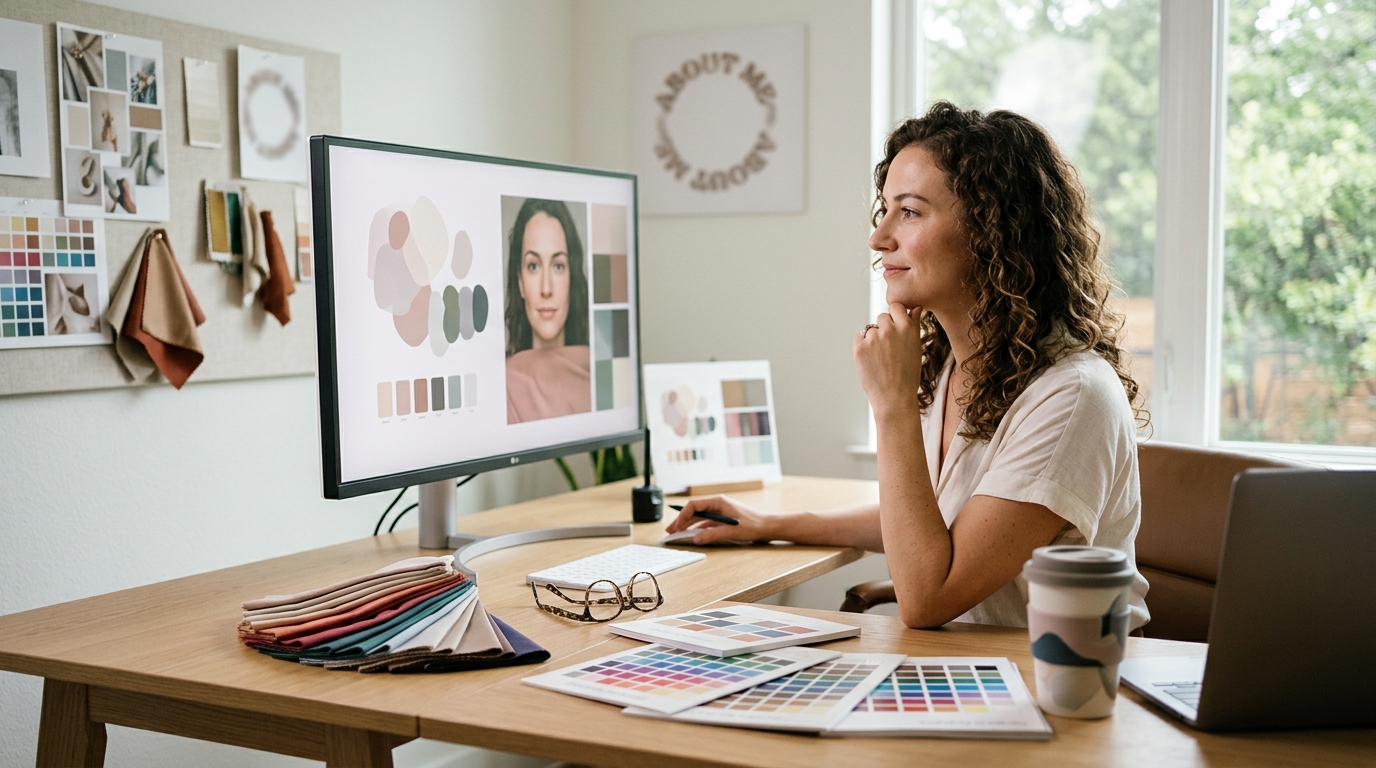
Virtual personal color analysis is a remote styling service where a trained analyst evaluates your natural coloring through high-resolution photographs and digital draping techniques. This guide explains the exact workflow, from photo submission to final palette delivery, and how ATX Color Studio applies advanced 23-Season and 35-Palette systems to provide accurate results from anywhere in the world.
What Is Virtual Color Analysis?
Virtual color analysis is a customized service involving photograph review, professional analysis, preparation, and personalized materials. It allows clients to receive the same level of detailed assessment as an in-person session without traveling to a studio. The process relies heavily on the accuracy of the images submitted by the client, as the analyst must interpret skin tone, depth, contrast, and coloring through a digital screen.
At ATX Color Studio, virtual sessions are designed for clients worldwide who want to unlock their most flattering colors. The service is not a simple quiz or a guess based on hair and eye color. It is a professional interpretation based on trained visual observation and specific color theory systems. This method ensures that the results reflect your true natural coloring, even when the analyst is not physically present.
The Photography Protocol
The foundation of any accurate virtual analysis is the quality of the photographs. Photographs may reproduce skin tone, depth, contrast, and coloring differently because of natural or artificial lighting, shadows, camera processing, white balance, and device settings. To mitigate these variables, clients must follow a strict preparation protocol before submitting their images.
Preparation Requirements
Clients are responsible for reviewing and following the preparation instructions provided for their service. Color-analysis preparation may include arriving without makeup, tinted moisturizer, tinted sunscreen, self-tanner, spray tan, or colored contact lenses. If preparation instructions are not followed, the analyst may need to explain the limitations of the assessment or request replacement photographs.
Lighting and Environment
The lighting environment is critical. The analyst needs to see how your skin reacts to light without the interference of filters, photo editing, or image compression. The goal is to capture your natural state so the analyst can accurately determine your undertone, value, and intensity. This step is non-negotiable for high-precision results.
Virtual Draping Technique
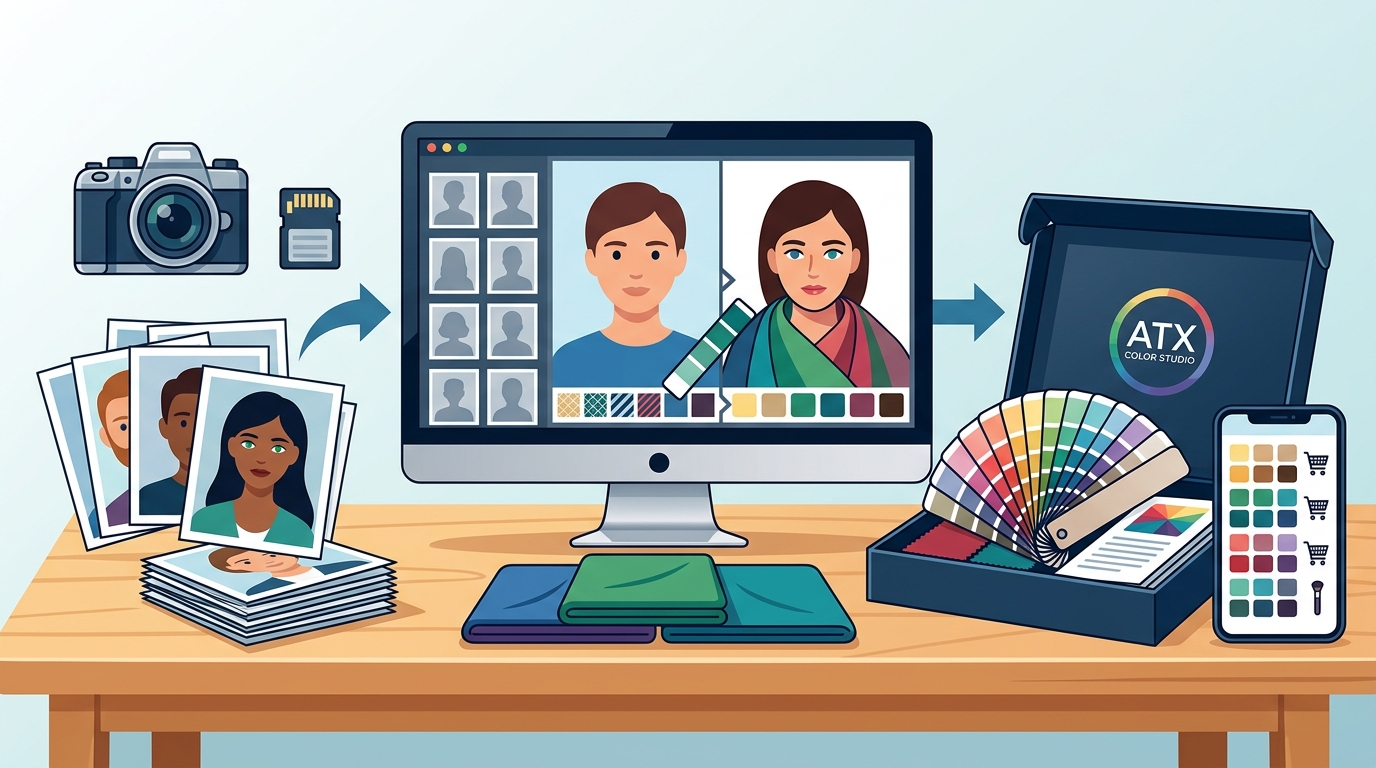
Virtual draping is the digital equivalent of the physical draping used in in-person sessions. In a traditional studio, an analyst holds fabric swatches near the client's face to see how different colors affect their complexion. In a virtual setting, the analyst uses professional tools to simulate this effect or analyzes the interaction between your skin tone and specific color values in the photographs.
This technique allows the analyst to determine which colors create harmony and which create discord. For example, a color that is too deep or too bright for your natural contrast level will be identified as a clash. The analyst evaluates how the colors reflect light onto your skin, looking for signs of dullness, redness, or a healthy glow. This systematic comparison is what separates a professional virtual analysis from a casual online guess.
The 23-Season System
The 23-Season color analysis system is an advanced framework that expands beyond the traditional four-season model. It categorizes individuals into 23 distinct sub-seasons based on three primary attributes: undertone (warm, cool, or neutral), value (light, medium, or deep), and intensity (soft, bright, or muted). This granular approach ensures that two people with similar hair and eye colors can still receive different, highly specific palettes.
ATX Color Studio utilizes this advanced system, along with the 35-Palette System, to provide precise recommendations. The 23-Season system is particularly useful for virtual analysis because it provides a structured way to interpret the subtle differences in skin tone and contrast that are visible in high-quality photographs. By identifying your specific sub-season, the analyst can create a palette that is tailored to your unique combination of attributes.
Deliverables and Tools
Upon completion of the virtual analysis, clients receive a comprehensive set of materials designed to help them apply their new palette in daily life. These deliverables are personalized to their specific season and include practical guidance for shopping, makeup, and hair color decisions.
Physical and Digital Swatches
Clients typically receive a physical color swatch book for their season, which serves as a tangible reference for shopping. Additionally, they gain access to the Colorology app for their season, which provides a digital palette that can be accessed on their phone. This combination of physical and digital tools ensures that clients have their best colors at their fingertips, whether they are in a store or at home.
Follow-Up Support
The service often includes a Zoom follow-up call after the session. This call allows the client to ask questions, clarify recommendations, and discuss how to implement their palette in their existing wardrobe. This ongoing support is a key component of the virtual experience, ensuring that the analysis is not just a one-time event but a lasting resource.
Virtual vs. In-Person Comparison
Both virtual and in-person color analysis have their advantages, and the right choice depends on your location, schedule, and personal preferences. The table below summarizes the key differences between the two formats at ATX Color Studio.
| Feature | Virtual Color Analysis | In-Person Color Analysis |
|---|---|---|
| Location | Anywhere in the world | Bee Cave, Texas |
| Preparation | Photo submission and specific lighting requirements | Arrive without makeup, tanner, or colored contacts |
| Draping Method | Photograph review and digital assessment | Physical fabric draping in real-time |
| Deliverables | Digital palette, app access, and follow-up call | Physical swatch book, app access, and in-studio guidance |
| Best For | Clients outside the Austin area or with busy schedules | Clients who prefer hands-on, real-time interaction |
Key Takeaways
- Virtual color analysis is a professional service that relies on high-quality photographs and specific preparation protocols.
- The accuracy of the results depends on the client's adherence to lighting and makeup-free requirements.
- Virtual draping is a digital technique used to assess how colors interact with your skin tone and contrast.
- The 23-Season system provides a granular classification that goes beyond the basic four-season model.
- Clients receive both physical and digital tools, including a swatch book and app access, to use their palette.
- A follow-up call is often included to help clients implement their new colors in their daily lives.
- Virtual analysis is ideal for clients who cannot travel to the Bee Cave, Texas studio.
- ATX Color Studio uses advanced training and systems to ensure that virtual results are as precise as in-person sessions.
Frequently Asked Questions
Is virtual color analysis as accurate as in-person?
Yes, when the client follows the photography protocol strictly. The analyst uses the same professional judgment and systems, but the input is photographs rather than physical draping. The accuracy depends on the quality of the images and the lighting conditions.
What do I need to prepare for a virtual session?
You need to submit high-resolution photographs in natural light without makeup, tinted products, or colored contact lenses. You should also ensure that your skin is not recently tanned or affected by sun exposure.
Can I still wear black if it is not in my palette?
Yes. Color analysis is a guide, not a rigid rule. You can use styling techniques, such as keeping black away from your face or pairing it with your best colors, to make it work for you.
What is the difference between the 23-Season and 35-Palette systems?
The 23-Season system categorizes individuals into 23 sub-seasons based on undertone, value, and intensity. The 35-Palette system is an advanced framework that provides even more specific color recommendations. ATX Color Studio is trained in both to provide the most precise results possible.
Do I receive a physical swatch book with a virtual analysis?
Yes, clients typically receive a physical color swatch book for their season, along with access to the Colorology app. This ensures you have both a tangible and digital reference for your best colors.
How long does the virtual analysis process take?
The process involves photograph review, professional analysis, and the creation of personalized materials. The specific turnaround time may vary, but the service is designed to be efficient and thorough.
Conclusion
Virtual personal color analysis is a powerful tool for anyone who wants to understand their natural coloring and use it to their advantage. By following a strict photography protocol and utilizing advanced systems like the 23-Season model, you can receive precise, personalized results from anywhere in the world. ATX Color Studio is dedicated to helping you unlock your most flattering colors with the same level of expertise and care, whether you are in Austin or across the globe.
If you are ready to discover your true colors, book your virtual color analysis today and start building a wardrobe that works for you.