
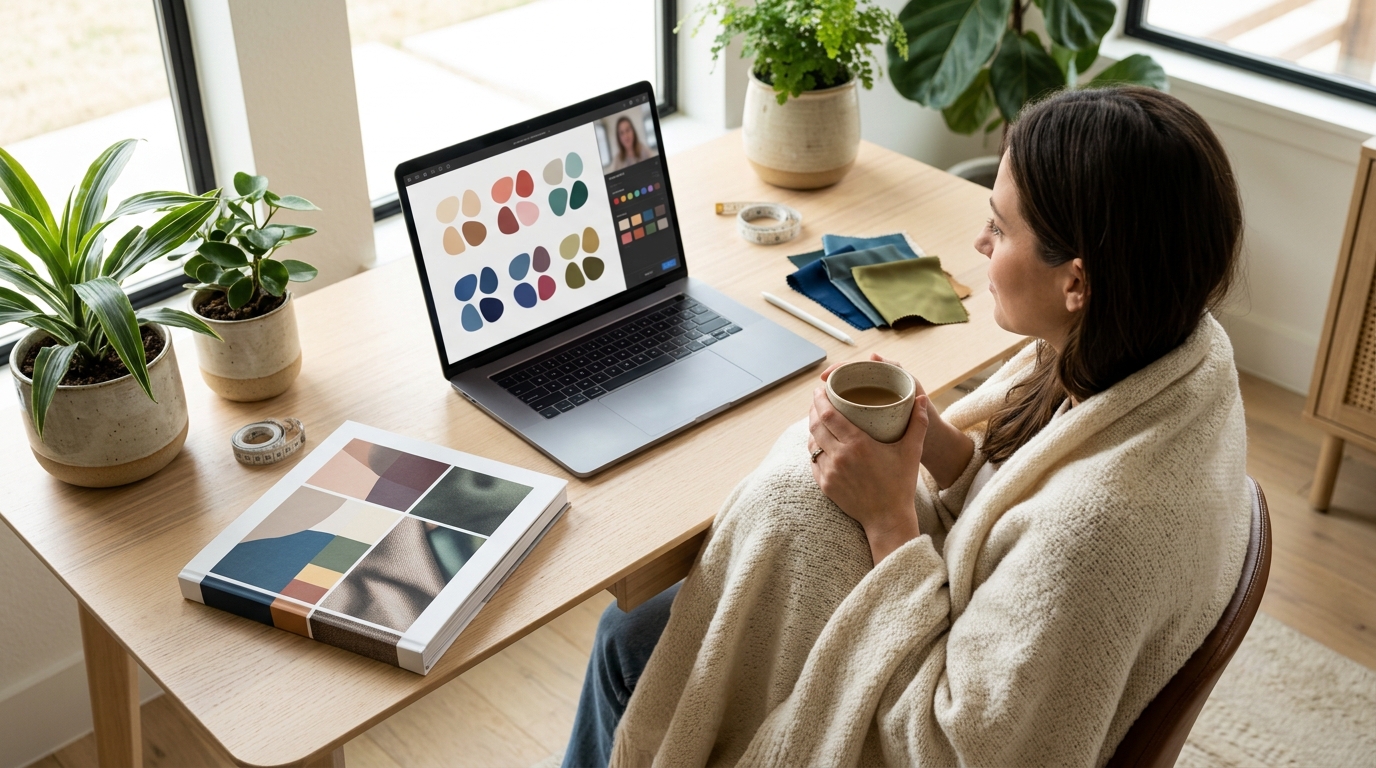
Virtual personal color analysis is a remote styling service where a professional evaluates your natural coloring through high-resolution photographs and digital tools. This guide explains the exact workflow, from photo submission to final palette delivery. We will cover digital draping techniques, lighting requirements, and how to prepare for a successful remote session.
Digital Draping Technique
Traditional color analysis relies on physical fabric drapes held against the face. In a virtual setting, analysts use digital draping to replicate this process. Digital draping is the technique of overlaying color swatches onto a photograph to observe how specific hues interact with your skin tone, eye color, and hair. This method allows for precise comparison without the need for physical materials.
The Role of Color Theory
Analysts apply color theory principles to determine your undertone, value, and intensity. They look for harmony between the drape color and your natural features. A well-executed digital drape will make your skin appear clear and your eyes appear bright. If a color clashes, it may create shadows or dullness. This visual feedback is the core of the remote assessment.
Accuracy and Limitations
While digital draping is highly effective, it depends on image quality. The analyst must see your true skin tone without distortion from filters or poor lighting. ATX Color Studio uses advanced systems to ensure that the digital overlays match the physical colors you will encounter in clothing and makeup. This precision helps bridge the gap between a screen and real-world styling.
Photo Preparation and Lighting
The success of a virtual analysis hinges on the quality of the photographs you submit. You must provide images that accurately represent your natural appearance. This means removing all makeup, tinted moisturizers, and self-tanners. Colored contact lenses should also be removed to reveal your true eye color.
Lighting Requirements
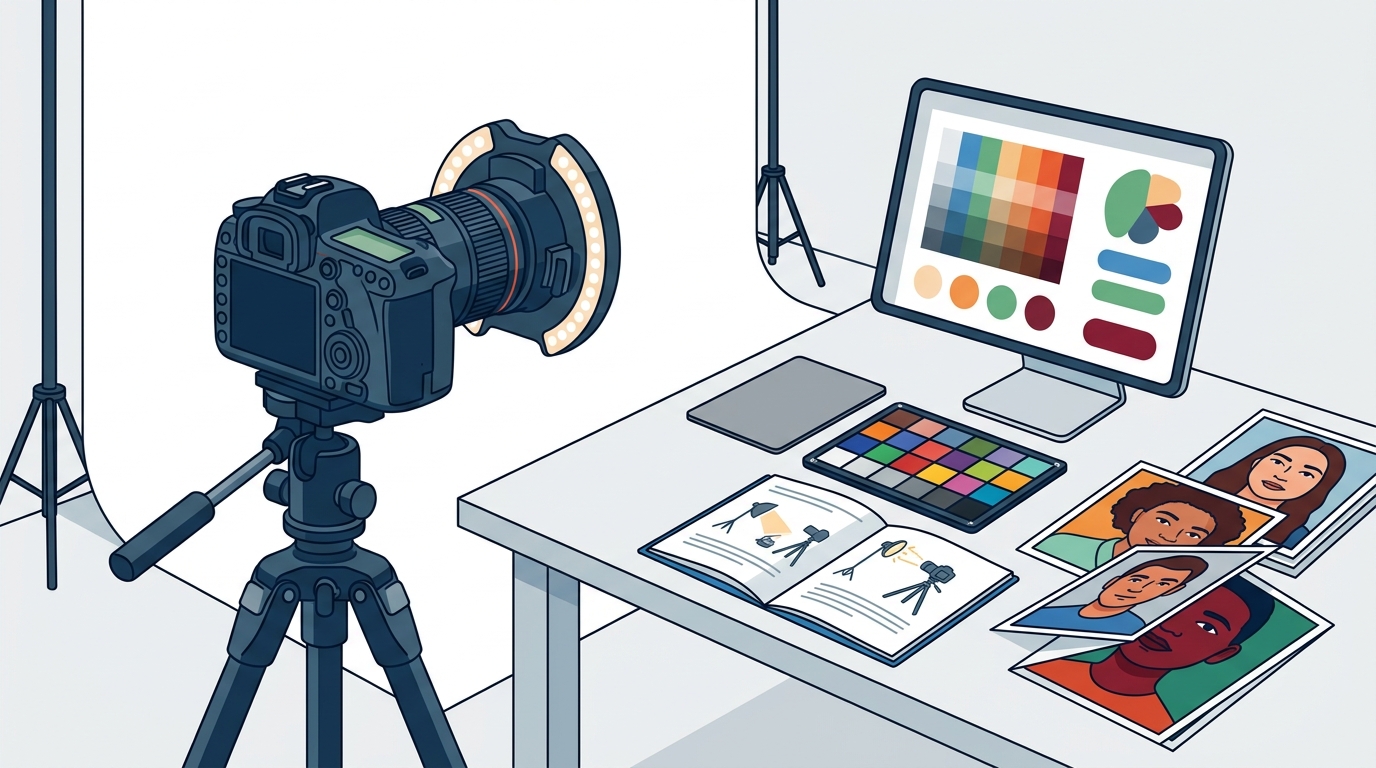
Natural daylight is the gold standard for color analysis photos. Avoid direct sunlight, which creates harsh shadows, and avoid artificial indoor lighting, which can cast yellow or blue tints. The best time to take photos is during the day, near a window with diffused light. Ensure the light source is in front of you, not behind you, to illuminate your face evenly.
Camera and Device Settings
Use a high-resolution camera or smartphone. Disable any automatic filters, beauty modes, or image compression features. The goal is a raw, unedited image. If you are unsure about your settings, take multiple test shots and check them on a larger screen to ensure the colors look true to life. Poor photo quality can lead to inaccurate results, so this step requires patience and attention to detail.
The Analysis Process
Once your photos are submitted, the analyst begins a systematic evaluation. This process involves looking at your skin, eyes, and hair in combination. They assess your undertone (warm, cool, or neutral), your value (light, medium, or deep), and your intensity (soft or bright). These three factors determine your specific seasonal color direction.
Undertone Identification
Undertone is the subtle hue beneath the surface of your skin. It is not your skin color, but the underlying cast. Analysts look for yellow, peach, or golden hints for warm undertones, and pink, blue, or red hints for cool undertones. Neutral undertones show a mix of both. This identification is critical because it dictates which metal jewelry and clothing colors will harmonize with your complexion.
Value and Intensity Assessment
Value refers to the lightness or darkness of your features. Intensity refers to the saturation or brightness. A person with light, soft features will have a different palette than someone with deep, bright features. The analyst combines these observations to place you within a specific season or sub-season. This detailed breakdown ensures that your recommendations are tailored to your unique coloring rather than a generic category.
Deliverables and Tools
After the analysis is complete, you receive a set of personalized materials. These deliverables are designed to help you apply your results in daily life. You will typically receive a digital palette showing your best colors. This palette serves as a reference guide for shopping and styling.
Digital Guides and Apps
Many virtual services provide access to digital apps or guides. These tools allow you to view your palette on your phone while shopping. They often include specific recommendations for clothing, makeup, and hair color. Having these tools at your fingertips makes it easy to make informed decisions in real-time. You can check if a shirt or lipstick shade is in your palette before purchasing.
Follow-Up Support
Some services include a follow-up call or consultation. This session allows you to ask questions about your results and discuss how to implement them. It is a chance to clarify any confusion and receive personalized advice. This support ensures that you feel confident using your new palette. It transforms the analysis from a one-time event into a long-term styling resource.
Virtual vs. In-Person Comparison
Choosing between virtual and in-person analysis depends on your location and preferences. Both methods have distinct advantages. The table below summarizes the key differences to help you decide which format is right for you.
| Feature | Virtual Analysis | In-Person Analysis |
|---|---|---|
| Location | Remote, worldwide | Studio visit required |
| Method | Digital draping on photos | Physical fabric draping |
| Preparation | Photo submission | Arrive without makeup |
| Convenience | High, from home | Requires travel and scheduling |
| Interaction | Asynchronous or video call | Face-to-face real-time |
Key Takeaways
- Virtual color analysis uses digital draping to evaluate your natural coloring through photographs.
- Photo quality is critical; use natural light and remove all makeup and filters.
- Undertone, value, and intensity are the three core factors in determining your palette.
- Digital deliverables like apps and guides make it easy to apply your results while shopping.
- Virtual sessions are convenient for clients who cannot travel to a physical studio.
- Follow-up support helps you understand and implement your new color direction.
- The process is systematic and based on professional color theory, not guesswork.
- Both virtual and in-person methods provide accurate results when performed correctly.
Frequently Asked Questions
How accurate is virtual color analysis compared to in-person?
Virtual analysis is highly accurate when high-quality photos are provided. The digital draping technique allows for precise color comparison. The main variable is photo quality, so following preparation instructions is essential for the best results.
What do I need to prepare for a virtual session?
You need to take clear, unedited photos in natural light. Remove all makeup, tinted products, and colored contacts. Ensure your hair is in its natural state. Follow the specific photo guidelines provided by your analyst to ensure accuracy.
Can I wear makeup during the photo session?
No, you should not wear makeup. Makeup alters your skin tone and can mask your true undertone. This can lead to an inaccurate analysis. You must appear in your natural state for the photos to be valid.
What if I live far from Austin?
Virtual analysis is designed for clients worldwide. You do not need to live in Austin or anywhere else. You can participate from your home in any location. This makes it an accessible option for those who cannot travel to a physical studio.
How long does the process take?
The process typically involves submitting photos, waiting for the analysis, and receiving your results. The timeline varies by service, but it is generally faster than scheduling a physical appointment. You will receive your palette and guides within a few days of submitting your photos.
Do I get a physical swatch book with virtual analysis?
Some services include a physical swatch book, while others provide only digital tools. Check the specific inclusions of the service you choose. Digital tools are often more convenient for daily use, but a physical book can be a nice reference.
Is virtual analysis suitable for men?
Yes, color analysis is suitable for anyone. The principles of color theory apply to all genders. Men can benefit from knowing their best colors for clothing, grooming, and accessories. The process is the same regardless of gender.
Conclusion
Virtual personal color analysis is a powerful tool for discovering your most flattering colors. By understanding the digital draping technique and preparing your photos correctly, you can achieve accurate results from anywhere in the world. This method combines professional expertise with modern technology to provide a convenient and effective styling solution. Whether you are in Austin or across the globe, you can unlock your true colors with confidence.
To begin your journey, explore our virtual color analysis services at ATX Color Studio. We are ready to help you find your best colors with precision and care.