
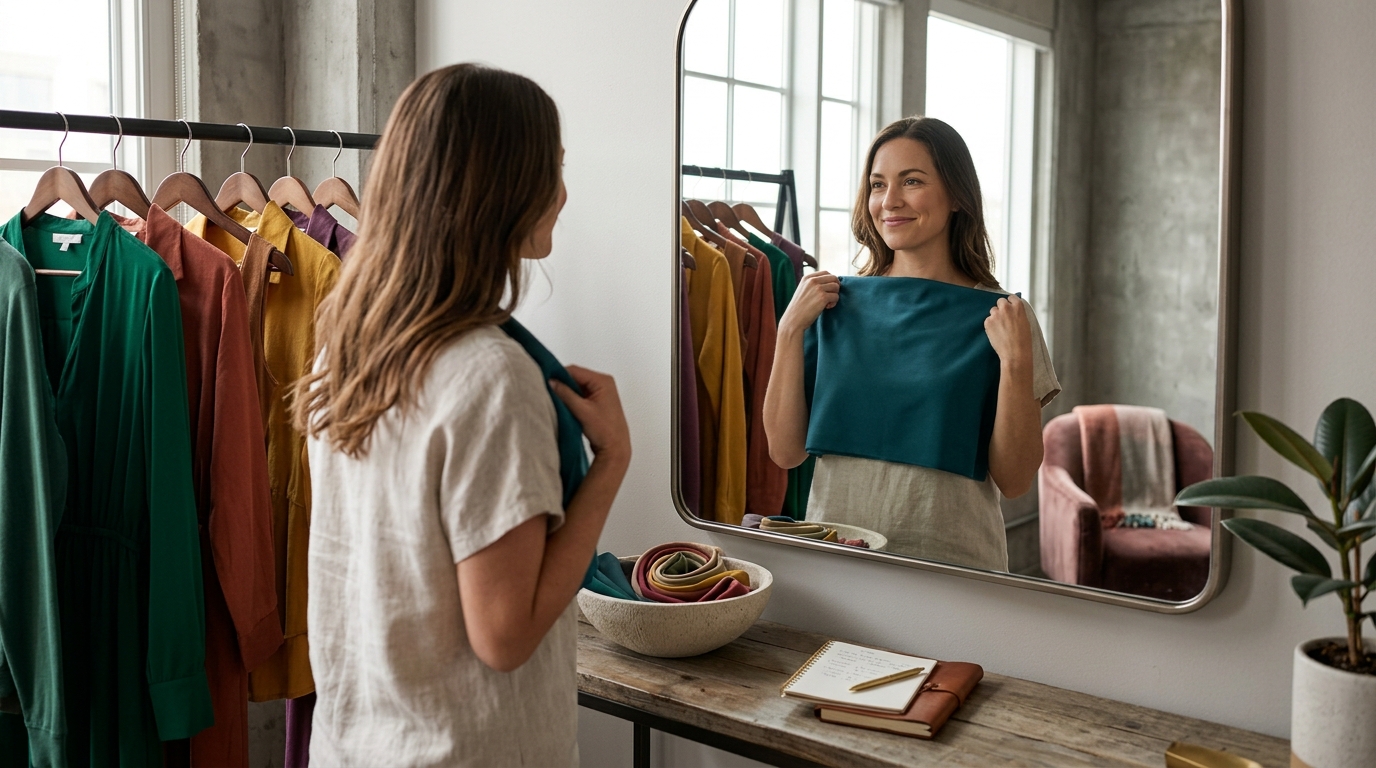
Choosing clothing colors that suit your skin tone begins with identifying your undertone, value, and intensity. ATX Color Studio uses advanced 23-Season and 35-Palette systems to provide precise, individualized results. This guide covers how to determine your undertone and how to apply those findings to your wardrobe, makeup, and accessories for a cohesive look.
Undertone Identification
Undertone is the subtle hue beneath the surface of your skin, distinct from your surface skin color. It is the primary factor in determining which colors harmonize with your complexion. Most people have warm, cool, or neutral undertones, but professional analysis looks deeper at value and intensity as well.
Why Surface Color Is Misleading
Many people assume their hair and eye color dictate their best clothing colors. This is a common misconception. Two individuals can have identical blonde hair and blue eyes but belong to completely different seasonal palettes. Color analysis is based on the interaction of undertone, value (lightness or darkness), and intensity (softness or brightness). Relying solely on surface features often leads to wardrobe choices that wash you out or create unwanted contrast.
The Limitations of Home Tests
Popular home tests, such as checking vein color or the gold-versus-silver jewelry test, are often unreliable. Vein color can shift based on lighting, skin thickness, and body temperature. Similarly, jewelry tests can be skewed by the specific alloy of the metal or the lighting in the room. Professional draping removes these variables by using standardized color swatches in controlled lighting. This systematic comparison reveals how your skin reacts to warm, cool, soft, and bright colors in real time.
Professional Draping vs. Online Quizzes
Online quizzes are entertaining but lack the precision of visual assessment. They cannot account for the subtle nuances of your specific coloring. A professional session, such as the in-person color analysis offered by ATX Color Studio, allows the analyst to observe your skin under professional tools. This ensures that the resulting palette is tailored to your unique combination of traits rather than a generalized category.

Practical Styling Application
Once you know your palette, the goal is to integrate those colors into your daily life without feeling restricted. Your seasonal palette is a guide, not a rigid rulebook. It provides a framework for building a wardrobe that works consistently, reducing the stress of daily outfit decisions.
Strategic Placement of Neutrals
If a staple neutral like black is not in your best color range, you do not need to discard it. Instead, use strategic placement. Wearing black below the waist, such as in pants or shoes, minimizes its impact on your complexion. Pairing these darker items with tops in your best seasonal colors near the face creates a balanced look. This technique is particularly useful for lighter seasons where high-contrast neutrals can create shadows or emphasize redness.
Choosing Jewelry and Accessories
Jewelry metals reflect light onto your skin, making them a critical part of your color story. Warm undertones typically harmonize with yellow gold, bronze, and copper. Cool undertones are often enhanced by silver, platinum, and white gold. Neutral undertones can wear both, though contrast levels may dictate which metal pops more. Matching your jewelry to your undertone helps tie your outfit together and adds a subtle glow to your overall appearance.
Makeup and Hair Color Harmony
Clothing colors do not exist in a vacuum. Your makeup and hair color should align with your palette to create a cohesive look. If your hair is dyed a shade that clashes with your undertone, it can affect how clothing colors appear. A professional analysis provides guidance on hair color direction and makeup shades that complement your skin. This holistic approach ensures that your entire presentation, from hair to hemline, works in harmony.
| Undertone | Best Clothing Colors | Best Jewelry Metals | Styling Tip |
|---|---|---|---|
| Warm | Earth tones, warm pastels, rich oranges | Yellow gold, bronze, copper | Keep warm colors near the face for a sunlit effect |
| Cool | Icy blues, crisp whites, deep purples | Silver, platinum, white gold | Use cool neutrals to reduce redness and add clarity |
| Neutral | Soft taupes, muted greens, balanced neutrals | Soft gold, silver, rose gold | Mix metals and colors based on contrast preference |
Key Takeaways
- Undertone is the primary determinant of which colors suit your skin, not surface hair or eye color.
- Home tests like vein checks are often inaccurate due to lighting and environmental factors.
- Professional draping provides a precise, individualized palette based on value and intensity.
- You can still wear colors outside your palette by adjusting their placement, such as keeping dark neutrals away from the face.
- Jewelry metals should match your undertone to enhance your natural radiance.
- Makeup and hair color should align with your clothing palette for a cohesive look.
- Color analysis is a guide for clarity, not a set of restrictive rules.
Frequently Asked Questions
Can I wear black if it is not in my color palette?
Yes. You can wear black by keeping it away from your face. Pair black bottoms or accessories with tops in your best seasonal colors to maintain harmony.
How is professional color analysis different from online quizzes?
Professional analysis uses visual draping in controlled lighting to assess your specific undertone, value, and intensity. Online quizzes rely on self-reporting and cannot account for subtle visual nuances.
Does color analysis mean I have to throw away my clothes?
No. Color analysis provides a guide for what works best. You can still wear items outside your palette by using styling techniques like strategic placement and balancing with better colors.
What is the difference between warm and cool undertones?
Warm undertones have yellow, peach, or golden hints. Cool undertones have pink, blue, or red hints. This distinction determines which metal and clothing colors harmonize with your skin.
Can I wear both gold and silver jewelry?
If you have a neutral undertone, you can often wear both. If you are distinctly warm or cool, sticking to your preferred metal family usually creates a more cohesive look.
How does hair color affect my clothing choices?
Your hair color is part of your overall coloring. If your hair is dyed a shade that clashes with your undertone, it can affect how clothing colors appear. Aligning hair color with your palette helps your clothing choices work better.
Conclusion
Choosing clothing colors that suit your skin tone is about understanding the science of color interaction. By identifying your undertone and applying practical styling strategies, you can build a wardrobe that feels effortless and cohesive. ATX Color Studio offers expert-led analysis to help you navigate these choices with confidence. To begin your journey, to schedule a session.