
How to Find a Top-Rated Color Analysis Consultant in Austin, Texas
Choosing the right color analysis consultant in Austin requires evaluating their training depth, the specific color system they use, and their ability to provide actionable wardrobe guidance. ATX Color Studio operates in Bee Cave, Texas, utilizing advanced 23-Season and 35-Palette systems to deliver highly specific, individualized results. This guide covers the essential factors to consider when selecting a professional, including the differences between basic and advanced color systems, the importance of professional draping, and how to prepare for your session to ensure accurate results.
Understanding Color Analysis Systems
Color analysis is the process of determining which colors harmonize with your natural skin tone, hair color, and eye color to create a balanced and flattering appearance. The method used by the consultant significantly impacts the precision of your results. Many beginners start with the traditional four-season system, which categorizes individuals into Spring, Summer, Autumn, or Winter. While this provides a general direction, it often lacks the nuance required for a truly personalized wardrobe strategy.
Advanced Seasonal Systems
Why Specificity Matters
Specificity in color analysis translates to better shopping decisions. When you know your exact sub-season, you can identify which shades of blue, red, or neutral will make your complexion look its best. This level of detail helps eliminate the guesswork that often leads to wardrobe dissatisfaction. A consultant who uses a basic system may provide a palette that is technically correct but not optimized for your specific contrast levels.
The Importance of Professional Draping
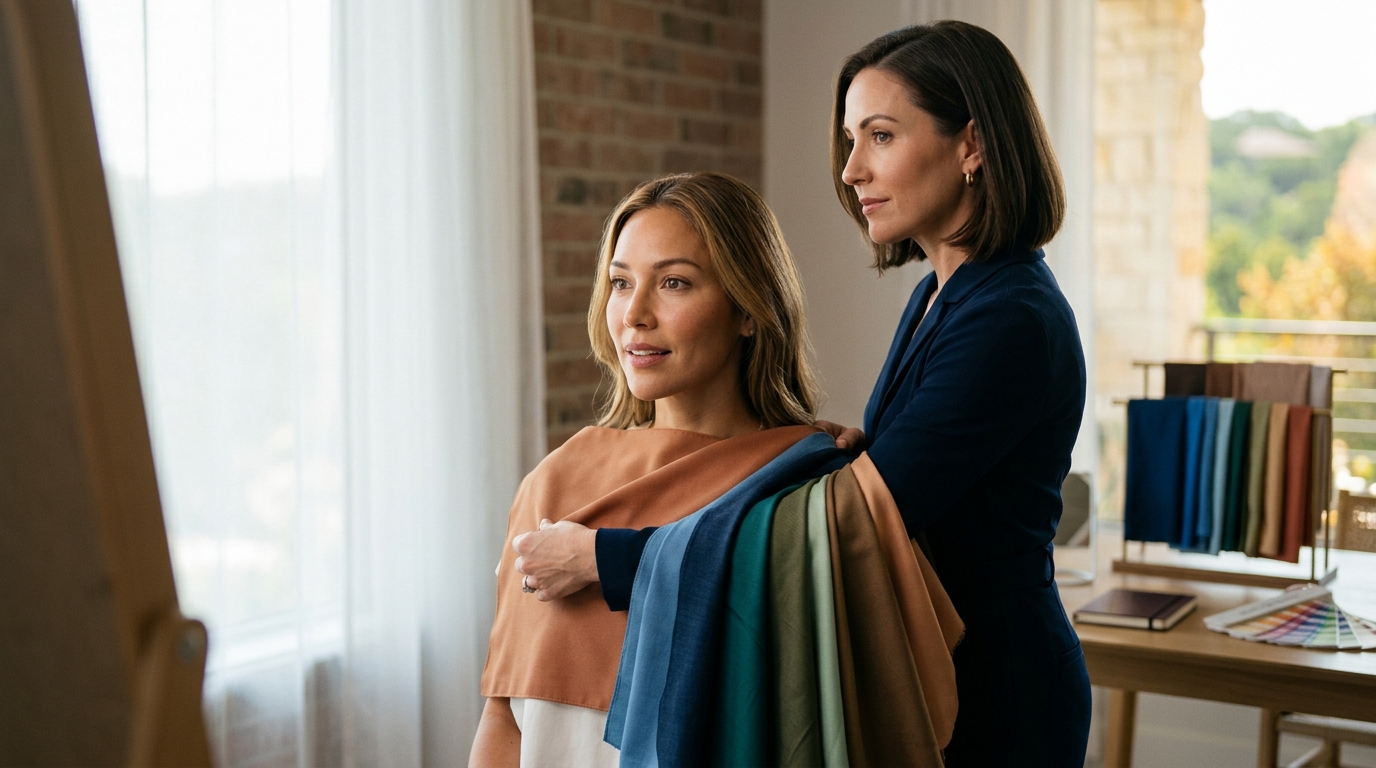
Professional draping is the core technique used in in-person color analysis. It involves placing fabric swatches of various colors near your face to observe how they interact with your natural coloring. This visual comparison reveals how your skin reacts to warm, cool, soft, and bright colors in real time. Unlike online quizzes or vein tests, draping provides immediate, objective feedback based on light reflection and color harmony.

The Draping Process
During a professional session, the analyst will systematically test different color families. They will observe how specific shades affect the appearance of your skin, eyes, and hair. This process helps identify your best neutrals, your most flattering jewel tones, and the colors that may wash you out. The analyst uses their trained eye to make judgments that are difficult to replicate at home, especially under varying lighting conditions.
Lighting and Environment
The environment in which the analysis takes place plays a crucial role in accuracy. Professional studios are designed to provide consistent, neutral lighting that minimizes distortion. This ensures that the colors you see are true to their actual hue and value. When choosing a consultant, consider whether their studio is equipped to provide a controlled environment for accurate draping.
In-Person vs. Virtual Analysis
While in-person analysis is the gold standard for accuracy, virtual color analysis has become a viable option for those who cannot travel to a studio. Virtual sessions rely on high-quality photographs submitted by the client. The analyst reviews these images to assess your coloring and provide recommendations. This method is particularly useful for clients located outside of Austin or those with scheduling constraints.
Accuracy Considerations
The accuracy of a virtual analysis depends heavily on the quality of the photographs provided. Factors such as lighting, camera settings, and screen calibration can affect how colors appear in digital images. A skilled analyst will request specific types of photos to mitigate these variables. If you choose a virtual session, be prepared to follow detailed preparation instructions to ensure the best possible results.
Choosing the Right Format
For most clients, an in-person session offers the most comprehensive experience. It allows for real-time adjustments and immediate feedback. However, if you are located far from Austin, a virtual session with a reputable consultant can still provide valuable insights. Consider your location, budget, and the level of detail you require when deciding between these two formats.
Preparing for Your Session
Proper preparation is essential for an accurate color analysis. The goal is to present your natural coloring without interference from external products. This means arriving without makeup, tinted moisturizers, or tinted sunscreens. These products can alter the appearance of your skin tone and lead to inaccurate results.
What to Avoid
In addition to makeup, you should avoid self-tanners, spray tans, and colored contact lenses before your appointment. Recent sun exposure can also affect your skin tone, so it is best to avoid tanning beds or excessive sun exposure in the days leading up to your session. Your hair should be in its natural color, or as close to it as possible, to ensure the analyst can assess your true contrast levels.
What to Bring
While you should arrive without makeup, it is helpful to bring a few basic items for comfort. A neutral-colored top or drape can be useful, though the consultant will provide the necessary fabrics for the analysis. If you have any specific concerns or questions about your wardrobe, bring them with you. This allows the consultant to address your individual needs during the session.
What to Expect After Analysis
After your color analysis, you will receive a personalized palette that outlines your best colors. This palette serves as a guide for shopping, makeup selection, and hair color decisions. Many consultants provide physical swatch books or digital guides that you can reference when making purchases. These tools help you apply your new knowledge in practical ways.
Implementing Your Palette
Using your palette effectively requires some adjustment. You may need to re-evaluate your existing wardrobe and identify which pieces align with your best colors. This is an opportunity to declutter and invest in items that truly flatter your coloring. Over time, you will develop a sense of which colors work best for you, making your daily dressing process more efficient and satisfying.
Ongoing Support
Some consultants offer follow-up sessions or resources to help you navigate your new palette. This can be particularly useful if you have questions about specific items or need guidance on how to mix and match your best colors. Look for a consultant who provides ongoing support and educational resources to help you make the most of your analysis.
Key Takeaways
- Advanced color systems like the 23-Season method provide more precise results than basic four-season analyses.
- Professional draping is the most reliable method for determining your best colors in person.
- Virtual analysis is a convenient option but depends on high-quality photography and strict preparation.
- Arriving without makeup, self-tanner, or colored contacts is critical for accurate results.
- A good consultant provides actionable tools, such as swatch books or digital guides, to help you shop.
- Consider the consultant's training and experience when making your selection.
- Follow-up support can help you integrate your new palette into your daily life.
Frequently Asked Questions
What is the difference between 4-season and 23-season color analysis?
The 4-season system categorizes individuals into Spring, Summer, Autumn, or Winter. The 23-season system breaks these down into sub-seasons, providing a more detailed assessment of your specific undertone, value, and intensity. This allows for more precise color recommendations.
Do I need to remove my makeup for a virtual analysis?
Yes, you should submit photographs without makeup, tinted moisturizers, or tinted sunscreens. These products can alter the appearance of your skin tone and affect the accuracy of the analysis. Follow the specific photo instructions provided by your consultant.
How long does a color analysis session take?
In-person sessions typically last between one and two hours, depending on the depth of the analysis and the number of colors tested. Virtual sessions may take less time, but the preparation and review process can vary.
Can I wear black if it is not in my palette?
Yes, you can still wear colors outside your palette. The goal is to understand which colors are most flattering and use styling techniques to balance less optimal colors. For example, wearing black below the waist can minimize its impact on your complexion.
What should I do with clothes that are not in my palette?
You do not need to throw away clothes that are not in your palette. You can style them with your best colors near your face or use them as accents. Over time, you may choose to replace less flattering items with pieces that align with your palette.
Is color analysis a science?
Color analysis is based on color theory and professional visual assessment. It is not a medical or scientific test, but rather a personalized image and style service. Results are based on the analyst's training and the methodology used during the session.
How often should I get a color analysis?
Most people do not need to repeat a color analysis frequently, as your natural coloring remains relatively stable. However, if you experience significant changes in your appearance, such as a major hair color change or aging, you may consider a follow-up session to update your recommendations.
Conclusion
Finding the right color analysis consultant in Austin involves looking for a professional who uses advanced systems and provides thorough, personalized guidance. ATX Color Studio offers a premium experience with master-trained analysts and detailed 23-Season and 35-Palette systems. Whether you choose an in-person session in Bee Cave or a virtual analysis, the key is to select a consultant who prioritizes accuracy and provides you with the tools to use your results confidently. To begin your journey, to schedule your session.