
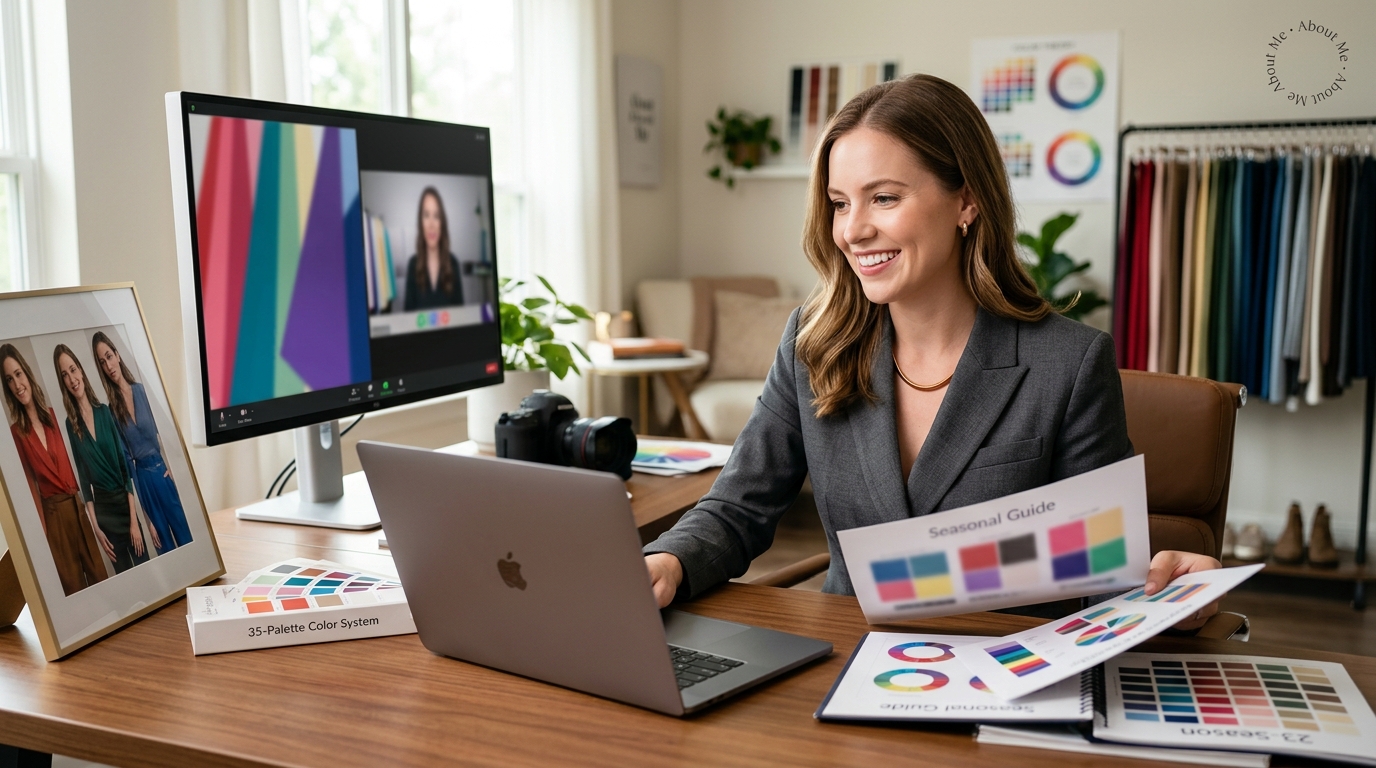
Virtual personal color analysis is a remote assessment process where a professional evaluates high-resolution photographs of your skin, hair, and eyes to determine your seasonal palette. This method allows clients to receive personalized color recommendations without traveling to a physical studio. This guide explains the technical workflow, from photo preparation to the final reveal, detailing how digital tools replicate the accuracy of in-person draping.
Digital Draping Technique
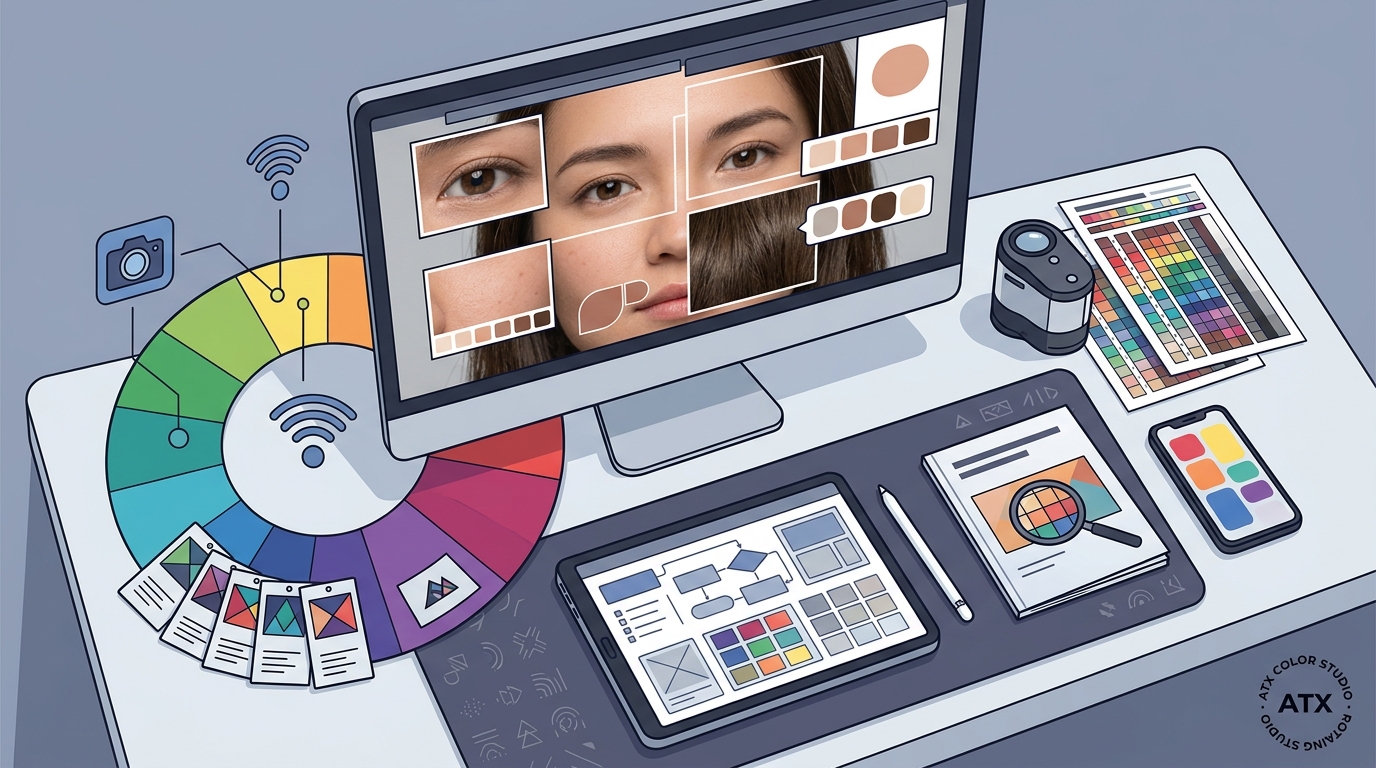
Digital draping is the process of overlaying color swatches onto a client's photograph to simulate the effect of fabric against the skin. In a traditional in-person session, an analyst holds physical drapes near the face to observe how colors interact with natural pigmentation. In a virtual setting, this is achieved through precise digital editing. The analyst uses software to place specific hex codes or RGB values directly onto the image of the client's face, neck, and hairline. according to Effects of color
This technique relies on the principle of simultaneous contrast. When a color is placed next to the skin, it alters the perceived tone of the skin. A flattering color will harmonize with the skin's undertone, creating a smooth transition. A clashing color will create a harsh boundary or cause the skin to appear dull. By analyzing these digital overlays, the analyst can identify which hues enhance the client's natural radiance and which ones create visual friction.
The Role of Color Theory
Color theory is the study of how colors interact and how they are perceived by the human eye. It provides the framework for understanding why certain colors work for specific skin types. In digital draping, the analyst applies color theory to predict how a client will look in various shades before they purchase clothing or makeup. This predictive capability is essential for remote services, as it allows for a high degree of accuracy without physical contact. according to Research on the
Virtual Draping Technique
Virtual draping is the broader workflow that encompasses the submission, analysis, and delivery of color results in a remote environment. It is not merely a photo edit; it is a structured diagnostic process. The process begins with the client submitting a set of standardized photographs. The analyst then reviews these images under controlled digital conditions, adjusting for any minor lighting inconsistencies to ensure a fair assessment. according to Virtual patient design
Once the baseline is established, the analyst performs the draping. They test a wide range of colors, from deep neutrals to bright pastels, to map out the client's color harmony. This step-by-step elimination process narrows down the options until a specific seasonal palette is identified. The final output is a personalized guide that includes clothing, makeup, and hair color recommendations tailored to the client's unique features. according to Recommendations for Methodology
Accuracy and Limitations
While virtual analysis is highly effective, it depends on the quality of the input data. The accuracy of the results is directly tied to the clarity and lighting of the submitted photos. If the photos are blurry, overexposed, or taken in harsh artificial light, the analyst may struggle to discern subtle undertones. Therefore, following strict preparation guidelines is critical for a successful virtual session. according to The Use of
Undertone, Value, and Chroma Assessment
Undertone is the subtle hue beneath the surface of the skin, which remains consistent regardless of the skin's surface color. It is the primary factor in determining which metals and colors will be most flattering. Analysts assess undertone by looking for hints of yellow, peach, or gold (warm) versus pink, blue, or red (cool). Neutral undertones contain a mix of both.
Value refers to the lightness or darkness of a color, while chroma refers to its intensity or saturation. These two factors, combined with undertone, create a three-dimensional map of a person's coloring. A client with a cool undertone, high value (light), and low chroma (soft) will have a very different palette than a client with a cool undertone, low value (deep), and high chroma (bright). This multi-variable assessment ensures that the recommendations are specific to the individual, rather than a generic category.
Why These Factors Matter
Understanding these variables allows the analyst to pinpoint the exact season. For example, a True Spring has a warm undertone, high value, and moderate to high chroma. A Deep Winter has a cool undertone, low value, and high chroma. By isolating each variable, the analyst can avoid common misclassifications that occur when only looking at surface skin color. according to Assessing the impact
Seasonal Color Systems
Seasonal color systems are frameworks that categorize human coloring into distinct groups based on the principles of color theory. The most common system is the four-season model, which divides people into Spring, Summer, Autumn, and Winter. However, advanced systems expand this model to provide greater precision. The 23-Season system, for instance, breaks down each of the four main seasons into smaller sub-seasons, such as Bright Spring or Soft Autumn.
Using a more granular system allows for highly specific recommendations. Instead of being told to wear "warm colors," a client in the 23-Season system might be advised to wear "bright, warm, and light colors." This level of detail helps clients make better purchasing decisions and build a wardrobe that truly reflects their unique coloring. ATX Color Studio utilizes both the 23-Season and 35-Palette systems to provide this advanced level of specificity.
Choosing the Right System
The choice of system depends on the client's needs and the analyst's training. Some clients prefer the simplicity of the four-season model, while others seek the precision of a 23 or 35-palette analysis. A skilled analyst will explain the differences between these systems and help the client understand what to expect from each. The goal is always to provide actionable guidance that the client can use in their daily life.
Photo Preparation Requirements
Photo preparation is the most critical step in a virtual color analysis. The quality of the photos directly impacts the accuracy of the results. Clients are typically required to submit a series of photos that meet specific technical criteria. These criteria are designed to ensure that the analyst can see the true color of the skin, hair, and eyes without interference from lighting or filters. according to Virtual Learning Community
Lighting and Environment
Photos should be taken in natural, diffused daylight. Avoid direct sunlight, which can create harsh shadows and alter the perceived color of the skin. Overcast days are ideal, as they provide soft, even lighting. The background should be neutral and uncluttered, such as a plain white or light gray wall. Avoid busy patterns or bright colors in the background, as they can distract from the face and affect the perception of undertones.
Makeup and Hair
Clients should be photographed without makeup, or with minimal, neutral makeup. Heavy foundation, contouring, or bright lipstick can mask the natural undertone of the skin. Hair should be pulled back away from the face to expose the forehead and hairline. If the client has recently dyed their hair, they should note this in their submission, as the analyst will need to consider the natural hair color for the analysis.
Technical Specifications
Photos should be high-resolution and in focus. Use a smartphone camera or a digital camera with a good sensor. Avoid using filters, beauty modes, or editing apps, as these can alter the color balance. The photos should be submitted in their original format, without compression. This ensures that the analyst can zoom in on specific areas of the face to assess subtle details.
Key Takeaways
- Virtual color analysis uses digital draping to simulate the effect of colors on the skin.
- Undertone, value, and chroma are the three key variables assessed in any color analysis.
- Advanced systems like the 23-Season model provide more specific recommendations than the basic four-season model.
- Photo preparation is critical; natural, diffused lighting and no makeup are essential for accuracy.
- The final deliverable is a personalized palette with recommendations for clothing, makeup, and hair.
- Virtual analysis is a convenient alternative to in-person sessions, offering similar accuracy when photos are prepared correctly.
Frequently Asked Questions
How accurate is virtual color analysis compared to in-person?
When high-quality photos are provided, virtual color analysis can be highly accurate. The key is in the photo preparation. If the photos are clear, well-lit, and unedited, the analyst can assess undertone, value, and chroma with precision. In-person sessions offer the advantage of seeing the client in real-time, but virtual sessions are a viable and effective alternative for many clients.
What do I need to submit for a virtual analysis?
Can I wear makeup in my photos?
It is best to avoid makeup for your submission photos. Makeup can alter the perceived undertone of your skin, leading to inaccurate results. If you must wear makeup, use a very light, neutral foundation and avoid contouring or bright colors. However, a bare face is always the preferred option for the most accurate analysis.
What is the difference between the 23-Season and 35-Palette systems?
How long does the virtual process take?
The timeline for a virtual color analysis can vary depending on the analyst and the complexity of the case. Typically, clients can expect to receive their results within a few days to a week after submitting their photos. The analyst needs time to carefully review the photos, perform the draping, and prepare the personalized recommendations.
Will I receive a physical swatch book?
Some virtual services include a physical swatch book with fabric samples of your best colors. This can be a helpful tool for shopping and building your wardrobe. Check with the specific provider to see if a physical swatch book is included in their virtual package. ATX Color Studio offers the option to add a physical swatch book to your virtual analysis.
Ready to Discover Your Colors?
Understanding how virtual color analysis works is the first step toward unlocking your personal palette. By mastering the technical aspects of photo preparation and understanding the principles of color theory, you can ensure that your remote session is as accurate and beneficial as an in-person one. ATX Color Studio is dedicated to providing you with the tools and knowledge you need to make confident color choices. Whether you are in Austin or anywhere in the world, our team is here to help you shine.
To begin your journey, claim your virtual color analysis spot today. You can also explore our free color analysis guide for more preparation tips. For those who prefer an in-person experience, we offer in-person color analysis in Austin. Connect with us via our contact page to answer any remaining questions. Join our newsletter for ongoing style inspiration and studio updates.