

Virtual personal color analysis is a remote styling service where a professional evaluates your natural coloring through photographs or video to determine your most flattering color palette. This guide covers how modern virtual analysis works, the differences between seasonal color systems, and how to choose a service that provides accurate, actionable results for your wardrobe, makeup, and hair.
What Is Virtual Color Analysis?
Virtual color analysis is a remote assessment method that allows clients to receive professional color recommendations without traveling to a physical studio. Instead of using physical fabric drapes in a room, the analyst reviews high-quality photographs or video submissions to evaluate your skin undertone, hair depth, and eye intensity. This approach has become a standard offering for many professional color studios, including ATX Color Studio's virtual color analysis service, which is designed for clients located anywhere in the world.
The core value of this service lies in accessibility. You can receive a personalized palette from the comfort of your home, saving time on travel and accommodation. For women who live far from major cities or have busy schedules, virtual analysis provides a practical way to gain clarity on their personal color direction. The process relies heavily on the quality of the images you submit, as the analyst must see your natural coloring without the distortion of filters or poor lighting.
Seasonal Color Systems: 4-Season vs. 23-Season
Understanding the underlying system is critical when evaluating virtual services. The traditional four-season system categorizes people into Spring, Summer, Autumn, or Winter. While simple, this method often lacks the nuance required for precise styling advice. Modern advanced systems, such as the 23-Season system, break these categories down into finer sub-seasons. This allows for a much more specific analysis of your unique combination of warmth, depth, and clarity.
The Limitations of Basic Systems
Basic four-season analysis can be too broad for many women. For example, a "Summer" in the basic system might actually be a "Cool Light Summer" or a "Deep Cool Summer" in a more advanced system. These distinctions matter because they dictate which specific shades of blue, pink, or gray will look best on you. A service that only offers four broad categories may not provide the level of detail needed to build a truly cohesive wardrobe.
The Advantage of Advanced Palettes
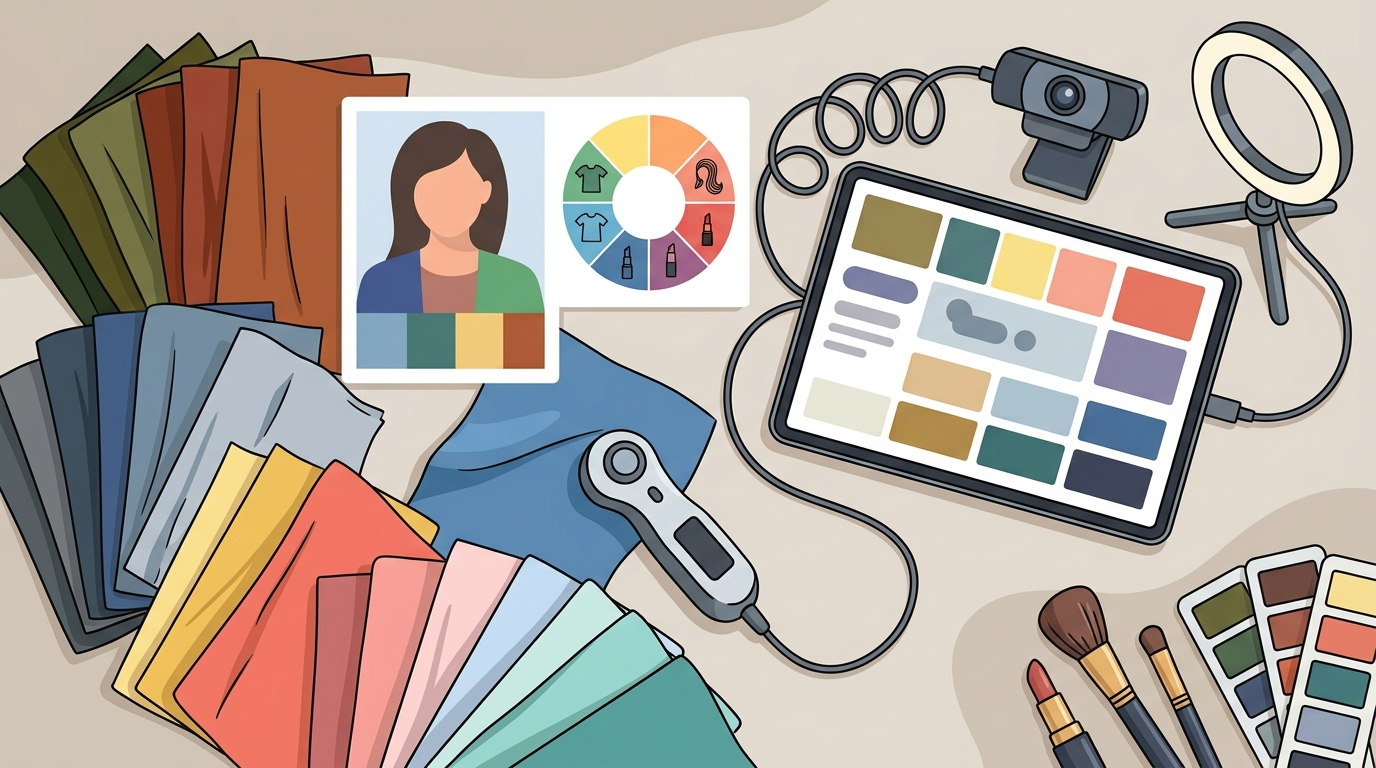
How Virtual Analysis Works: The Process
The virtual process typically follows a structured workflow designed to minimize error. First, you receive a set of instructions on how to take your photographs. These instructions are crucial and usually specify lighting conditions, camera angles, and what to wear. Next, you submit your images for review. The analyst then evaluates your coloring and prepares a personalized report or palette.
Step 1: Photograph Submission
You will be asked to take several photos, usually including a full-face shot, a profile shot, and a shot of your hair and eyes. The lighting must be natural and diffused, such as standing near a window on an overcast day. You must be bare-faced, without makeup, tinted moisturizer, or self-tanner, to ensure the analyst sees your true skin tone. Colored contact lenses should also be removed.
Step 2: Professional Evaluation
The analyst reviews your images to determine your undertone, value, and intensity. They may use digital tools to compare your coloring against specific color swatches. This step requires significant professional judgment, as the analyst must account for any slight variations in camera white balance or compression. A skilled analyst will look for consistency across multiple images to confirm the results.
Step 3: Receiving Your Results
After the analysis, you receive your personalized palette. This often includes a digital guide, a list of recommended colors for clothing and makeup, and sometimes access to a digital app or swatch book. Some services, like virtual color analysis at ATX Color Studio, include a follow-up call to discuss the results and answer your questions in real-time.
How to Choose the Right Virtual Service
Not all virtual color analysis services are created equal. When selecting a provider, you should evaluate their credentials, the system they use, and the deliverables they provide. A reputable service will be transparent about their methodology and the limitations of virtual analysis.
Credentials and Training
Look for an analyst who has completed advanced training in color analysis. Certifications from recognized programs or extensive experience with thousands of clients can be good indicators of expertise. For instance, Kirsten Welsch at ATX Color Studio is a double master-trained analyst with over 1,000 clients analyzed, which speaks to a high level of professional experience.
Deliverables and Support
Consider what you will actually receive. Do you get a simple list of colors, or a comprehensive guide with shopping tips? Is there a follow-up session included? A good service provides tools you can use immediately, such as a digital palette or access to a color app. They should also offer a way to ask follow-up questions if you are unsure about a specific item in your closet.
Virtual vs. In-Person: A Comparison
Choosing between virtual and in-person analysis depends on your location, budget, and preference for detail. In-person analysis allows the analyst to see your coloring in real-time under controlled lighting, which can be more accurate for subtle undertones. Virtual analysis offers convenience and accessibility but relies on the quality of your submitted photos.
| Feature | Virtual Color Analysis | In-Person Color Analysis |
|---|---|---|
| Convenience | High; can be done from anywhere | Low; requires travel to the studio |
| Accuracy | Dependent on photo quality and lighting | High; real-time observation in controlled lighting |
| Cost | Generally lower | Generally higher due to travel and time |
| Interaction | Asynchronous or via video call | Face-to-face, immediate feedback |
| Best For | Clients far from the studio or with busy schedules | Clients who want the most precise, hands-on experience |
For many women, virtual analysis is the ideal starting point. It provides a solid foundation for your color direction. If you are local to a studio, an in-person session may offer the ultimate level of detail, but virtual services have become sophisticated enough to provide highly accurate results for most clients.
Preparation Tips for Accurate Results
Success in virtual analysis depends largely on your preparation. Following the instructions carefully ensures that the analyst can see your true coloring. Here are the most important tips to keep in mind.
Lighting and Environment
Use natural, diffused light. Avoid direct sunlight, which creates harsh shadows, and avoid warm indoor lighting, which can shift your skin tone. A window on an overcast day is ideal. Ensure the background is neutral and uncluttered so the focus remains on your face.
What to Wear and Avoid
Wear a solid, neutral-colored top that does not match your skin tone. Avoid patterns, logos, or colors that are close to your hair or skin color. You must be bare-faced. Remove all makeup, including tinted sunscreens and moisturizers. If you wear colored contact lenses, switch to your natural lenses or remove them entirely. Do not use photo filters or editing apps.
Camera Settings
Use your phone's rear camera for the highest resolution. Ensure the image is sharp and in focus. Take multiple photos from slightly different angles to give the analyst a comprehensive view. If you are unsure about the quality, it is better to submit too many photos than too few.
Key Takeaways
- Virtual color analysis is a convenient and accessible way to determine your personal color palette from home.
- Advanced systems like 23-Season or 35-palette provide more precise results than basic four-season methods.
- Photo quality is the most critical factor in virtual analysis accuracy; follow lighting and makeup instructions strictly.
- Look for analysts with advanced training and a large client base to ensure professional expertise.
- Virtual services often include digital deliverables like palettes, apps, or follow-up calls to support your styling.
- In-person analysis remains the gold standard for precision, but virtual is a strong alternative for most clients.
- Preparation involves bare skin, natural light, and neutral clothing to avoid color distortion.
- Choose a service that offers clear communication and a way to ask follow-up questions after the analysis.
Frequently Asked Questions
Is virtual color analysis as accurate as in-person?
Virtual analysis can be highly accurate if you follow the preparation instructions carefully. The main variable is photo quality. A skilled analyst can determine your season and palette from good photographs, but in-person analysis allows for real-time observation under controlled lighting, which can be slightly more precise for subtle undertones.
What do I need to prepare for a virtual session?
You need to take high-quality photographs in natural, diffused light. You must be bare-faced, without makeup or tinted products, and wearing a solid neutral top. You should also remove colored contact lenses. The specific instructions will be provided by the service you choose.
What is the difference between 4-season and 23-season analysis?
The 4-season system categorizes people into Spring, Summer, Autumn, or Winter. The 23-season system breaks these into smaller sub-seasons, providing more specific recommendations based on your unique combination of warmth, depth, and clarity. The 23-season system is generally considered more precise.
Can I do color analysis myself?
You can try to guess your season using online quizzes or by looking at your veins, but these methods are often unreliable. Professional analysis involves systematic comparison of colors against your skin, hair, and eyes. A trained analyst can see nuances that are difficult to identify on your own.
What do I receive after a virtual color analysis?
Deliverables vary by service, but typically you will receive a personalized color palette, a guide to recommended colors for clothing and makeup, and sometimes access to a digital app or swatch book. Some services also include a follow-up video call to discuss the results.
How much does virtual color analysis cost?
Prices vary depending on the analyst and the level of detail provided. Virtual sessions are generally less expensive than in-person sessions because they do not require travel or studio time. It is best to check the specific pricing on the service's website.
Conclusion
Choosing the right virtual personal color analysis service is about finding a balance between convenience, expertise, and precision. By understanding the differences between color systems and preparing your photographs correctly, you can get accurate results from the comfort of your home. For women seeking a highly detailed and personalized experience, ATX Color Studio offers a premium virtual service that combines advanced 23-Season and 35-palette systems with professional guidance. Whether you are in Austin or across the globe, a well-executed virtual analysis can provide the clarity you need to build a wardrobe that works for you.