
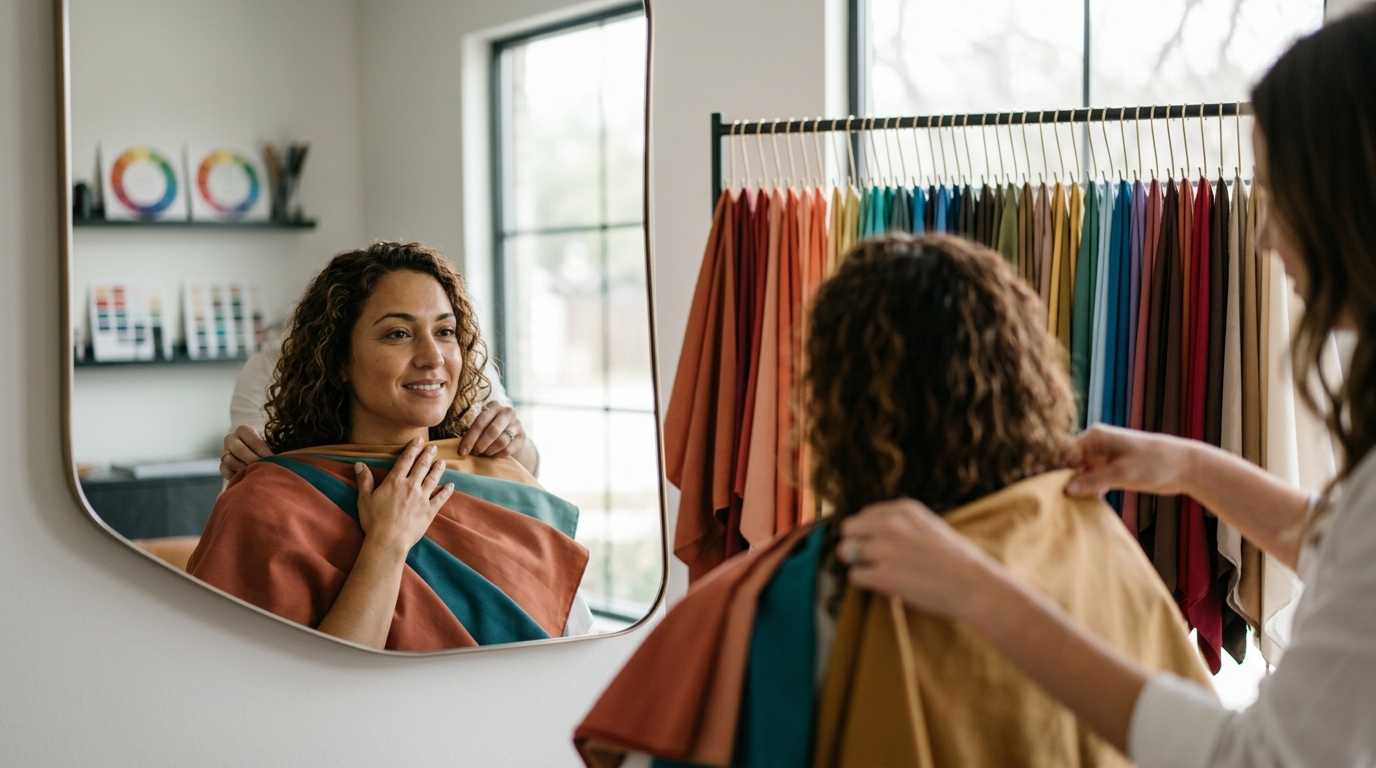
Choosing clothing colors that suit your skin tone begins with identifying your underlying undertone, value, and intensity. ATX Color Studio helps clients in Austin and worldwide use advanced 23-Season and 35-Palette systems to find their most flattering hues. This guide covers how to identify your undertone and apply those findings to your daily wardrobe.
Undertone Identification
Understanding your skin's underlying hue is the first step in selecting flattering clothing. Undertone is the subtle color beneath the surface of your skin, which remains consistent regardless of your surface skin color. It is generally categorized as warm, cool, or neutral. Warm undertones have yellow, peach, or golden hints, while cool undertones feature pink, blue, or red hints. Neutral undertones are a balanced mix of both.
Why the Vein Test Is Unreliable
Many people rely on the vein test, where blue veins suggest cool undertones and green veins suggest warm undertones. This method is often inaccurate because vein visibility depends on lighting, skin thickness, and body temperature. Professional color analysis avoids these single-trick methods in favor of systematic comparison. By using drapes of various colors, an analyst can see how your skin reacts to different hues in real time. This visual comparison reveals your true undertone more accurately than any home test.
The Role of Value and Intensity
Undertone is only one part of the equation. Value is the lightness or darkness of your natural coloring, while Intensity is the saturation or brightness of your features. Two people with the same undertone can have very different seasons if their value and intensity differ. For example, a Light Spring has warm undertones but light value and soft intensity, while a Deep Autumn has warm undertones but deep value and high intensity. This is why a simple four-season system often lacks the precision needed for modern styling. Advanced systems like the 23-Season method account for these nuances, ensuring your palette is tailored to your specific combination of traits.
Common Factors That Affect Perception
Several external factors can make it difficult to identify your natural coloring at home. Makeup, tinted moisturizers, and self-tanners can shift the perceived warmth of your skin. Colored contact lenses and recent sun exposure also play a role. When preparing for a professional session, it is best to arrive with a clean face and natural hair color. This ensures the analyst can assess your true features without interference from cosmetic products or artificial lighting.

Practical Styling Application
Once you know your palette, the goal is to integrate those colors into your daily life without feeling restricted. Your seasonal palette acts as a guide for which colors naturally harmonize with your complexion. The aim is to expand your wardrobe options by understanding which shades make you look vibrant and which ones might wash you out. By focusing on the colors that complement your undertone, value, and intensity, you can build a cohesive and confident style.
Building a Capsule Wardrobe
A capsule wardrobe is a collection of essential clothing items that work together seamlessly. When building one, prioritize neutrals that match your season. For warm undertones, earthy neutrals like camel, olive, and warm beige often work well. For cool undertones, crisp whites, true grays, and navy blues are typically more flattering. By anchoring your wardrobe with the right neutrals, you can mix and match pieces more easily. This approach reduces decision fatigue and ensures that most of your outfits look polished and intentional.
Choosing the Right Jewelry and Accessories
Accessories play a crucial role in completing an outfit. The metal of your jewelry should align with your undertone. Gold and bronze tend to flatter warm undertones, while silver and platinum suit cool undertones. Neutral undertones can often wear both. Beyond metal, consider the colors of your bags, scarves, and shoes. Placing your best colors near your face, such as in a scarf or earrings, can have a significant impact on your overall appearance. This strategic placement helps frame your face with hues that enhance your natural radiance.
Makeup and Hair Color Considerations
Clothing is not the only area where color matters. Your makeup and hair color should also align with your seasonal palette. Choosing lipsticks, eyeshadows, and foundations that match your undertone ensures a cohesive look. Similarly, hair color that complements your skin tone can enhance your features rather than clash with them. If you are unsure about these choices, a professional analysis can provide specific recommendations for both your wardrobe and your beauty routine. This holistic approach ensures that every aspect of your appearance works together harmoniously.
Key Takeaways
- Undertone is the subtle hue beneath your skin, distinct from your surface skin color.
- Value refers to the lightness or darkness of your natural coloring.
- Intensity describes the saturation or brightness of your features.
- Home tests like the vein check are often unreliable due to lighting and skin thickness.
- Professional draping provides a more accurate assessment by observing real-time skin reactions.
- Advanced systems like the 23-Season method offer greater precision than basic four-season models.
- Strategic placement of your best colors near the face can significantly enhance your appearance.
- A cohesive wardrobe, makeup, and hair color strategy creates a polished and confident look.
Frequently Asked Questions
Can I determine my undertone at home?
While you can make an educated guess, home tests are often inaccurate. Factors like lighting, makeup, and skin thickness can skew results. Professional draping is the most reliable method for identifying your true undertone, value, and intensity.
What is the difference between undertone and skin tone?
Skin tone refers to the surface color of your skin, which can change with sun exposure. Undertone is the underlying hue that remains consistent throughout your life. It is the undertone that determines which colors are most flattering to you.
Do I have to throw away clothes that are not in my palette?
No, you do not need to discard any items. You can still wear colors outside your palette by using styling techniques. For example, you can place your best colors near your face or balance a less flattering piece with accessories that complement your undertone.
How does the 23-Season system differ from the four-season system?
The four-season system is a basic model that categorizes people into Spring, Summer, Autumn, or Winter. The 23-Season system is more detailed, breaking each season into sub-seasons based on value and intensity. This allows for a more precise and individualized color palette.
Can I wear black if it is not in my palette?
Yes, you can still wear black. If black is not in your best colors, try wearing it below the waist or away from your face. Pairing it with your best colors near your face can help create a more harmonious look.
What should I wear to a color analysis appointment?
Wear a neutral-colored top, such as white, gray, or beige, that does not have a strong tint. Avoid wearing makeup, tinted moisturizers, or colored contact lenses. This allows the analyst to see your natural coloring clearly.
Is virtual color analysis as accurate as in-person?
Virtual analysis can be highly accurate if you follow the photo submission guidelines carefully. However, in-person draping allows for real-time observation of how your skin reacts to colors, which can provide even greater precision. Both methods can offer valuable insights into your best colors.
Conclusion
Choosing the right clothing colors is about understanding the unique combination of your undertone, value, and intensity. By moving beyond simple home tests and embracing a more detailed approach, you can build a wardrobe that truly reflects your natural beauty. ATX Color Studio offers expert guidance to help you navigate this process with confidence. Whether you are in Austin or joining virtually, our team is here to help you discover the shades that make you shine. To plan your visit, .