

Professional color draping is a systematic visual assessment using physical swatches to determine your specific undertone, value, and intensity. DIY methods rely on self-assessment, which is often skewed by lighting, makeup, and cognitive bias. Professional draping provides a precise, objective palette that eliminates the guesswork inherent in self-analysis.
The Limitations of DIY Self-Assessment
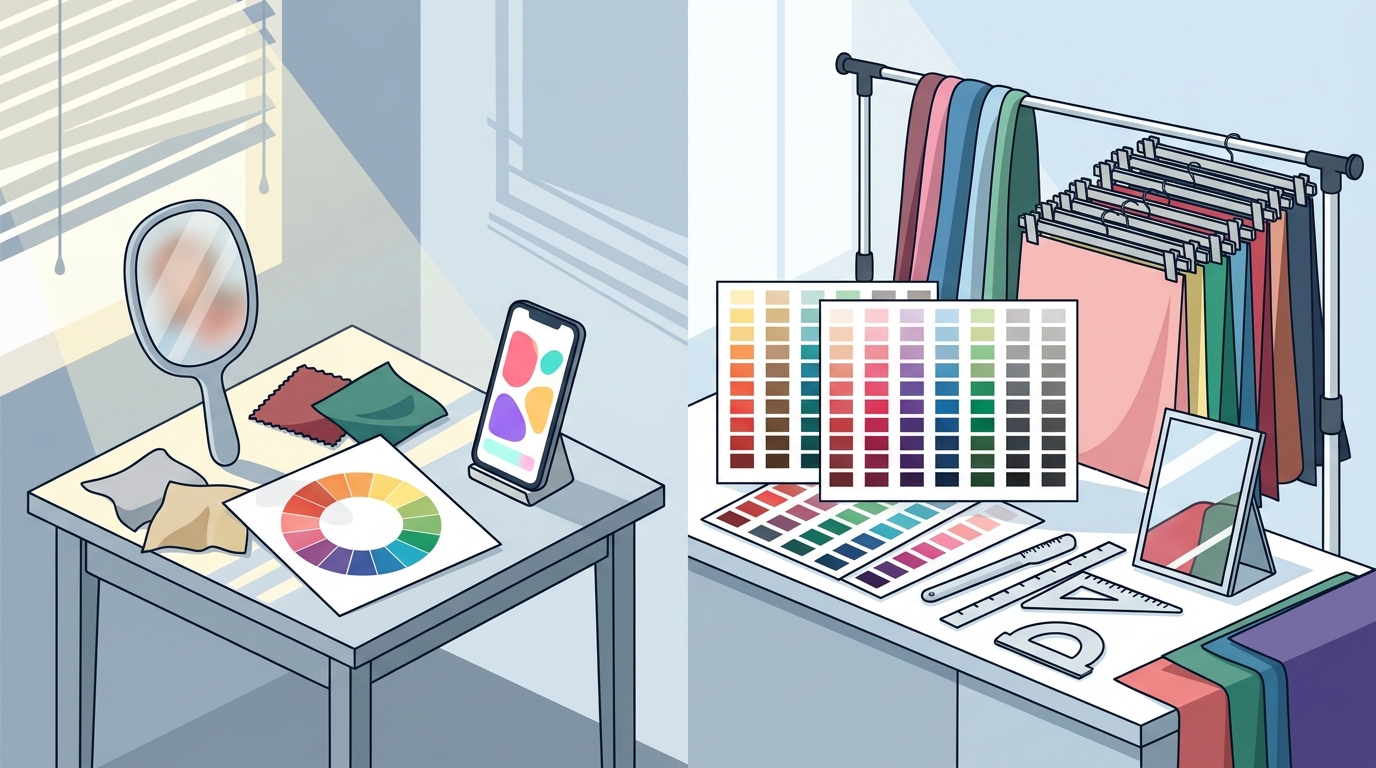
Many people attempt to determine their color season using online quizzes or the vein test. These methods are fundamentally flawed because they lack the comparative element required for accurate analysis. DIY color analysis is a self-directed attempt to identify personal color characteristics without professional tools or guidance. The primary issue is cognitive bias. When you look in a mirror, you are judging yourself against your own perception, which is often distorted by lighting conditions and the colors you are currently wearing.
Lighting is a critical variable that DIY methods rarely control. A warm-toned individual may appear cool under fluorescent office lighting, while a cool-toned individual may appear warm under incandescent bulbs. Professional analysts account for these variables by using standardized lighting and a comprehensive set of drapes. This ensures that the assessment is based on how your skin reacts to color, not how you perceive yourself in a specific environment.
The Science of Professional Draping
Professional color draping is a methodical process of placing specific color swatches near the face to observe the skin's reaction. This technique reveals your undertone, value, and intensity, which are the three core components of color analysis. Professional color draping is the systematic application of color swatches to determine an individual's most flattering palette. Unlike DIY methods that rely on a single observation, draping involves a series of comparisons. The analyst observes how the skin brightens, darkens, or appears neutral in relation to the drape.
For example, a True Spring client might look washed out in a cool blue drape but vibrant in a warm yellow-based green. This immediate visual feedback is impossible to replicate with a quiz or a vein check. The precision of this method allows for the identification of specific seasonal subtypes, such as Light Spring versus Soft Spring, which have distinct color requirements. This level of detail is crucial for building a wardrobe that works consistently.
Undertone vs. Surface Color
A common misconception in DIY analysis is the belief that hair and eye color determine your season. In reality, surface color is often misleading. Two women can have identical blonde hair and blue eyes but belong to completely different seasons due to differences in their skin's undertone. Undertone is the subtle hue beneath the surface of the skin that determines how colors interact with your complexion. It is the most critical factor in color analysis, yet it is the hardest to identify without professional tools.
Professional draping isolates the undertone by using a wide range of warm and cool swatches. This allows the analyst to see how your skin responds to different color temperatures. If your skin appears healthy and bright with warm drapes, you likely have a warm undertone. If it appears dull or ashen, you likely have a cool undertone. This objective assessment removes the guesswork and provides a reliable foundation for your color palette.
The 23-Season Advantage
Traditional four-season analysis is often too broad to provide specific guidance. The 23-Season method, used by ATX Color Studio, offers a more granular approach to color analysis. This system accounts for the nuances of value and intensity, allowing for a more precise identification of your personal palette. The 23-Season method is an advanced color analysis system that categorizes individuals into 23 distinct seasonal types based on undertone, value, and intensity. This precision is essential for clients who want to avoid the pitfalls of a generic four-season palette.
For instance, a Light Summer and a Soft Summer both have cool undertones, but their value and intensity differ significantly. A Light Summer thrives in bright, pastel colors, while a Soft Summer looks best in muted, low-contrast shades. A DIY quiz might label both as "Summer," leading to wardrobe choices that do not flatter one of the two. Professional draping distinguishes between these subtypes, ensuring that your recommendations are tailored to your specific color characteristics.
Practical Implications for Your Wardrobe
The difference between DIY and professional analysis becomes most apparent in practical application. A DIY palette often leads to a wardrobe full of colors that look good on the hanger but not on the person. Professional draping provides a curated list of colors that work together, making shopping easier and more efficient. Flattering shades are colors that harmonize with your natural undertone, value, and intensity, creating a cohesive and vibrant appearance. When you know your specific season, you can build a capsule wardrobe that maximizes your impact with minimal effort.
At ATX Color Studio, clients receive a personalized swatch wallet and shopping guides that translate their seasonal palette into actionable shopping advice. This practical approach ensures that the analysis is not just an academic exercise but a useful tool for daily life. Whether you are in Austin or joining virtually, the goal is to help you feel confident in your choices. To explore how professional draping can transform your wardrobe, to schedule a session.
Key Takeaways
- DIY methods are unreliable due to lighting, bias, and lack of comparative tools.
- Professional draping uses systematic swatch comparison to determine undertone, value, and intensity.
- Surface color like hair and eyes is less important than skin undertone in determining your season.
- The 23-Season method provides greater precision than the traditional four-season model.
- Professional analysis results in a practical, actionable palette for shopping and styling.
- Virtual and in-person professional draping offer the same level of accuracy and detail.
Frequently Asked Questions
Can I do color analysis at home with a mirror?
You can attempt it, but the results are often inaccurate due to lighting and bias. Professional draping uses standardized tools and lighting for a reliable assessment.
What is the most common mistake in DIY color analysis?
The most common mistake is relying on hair and eye color instead of skin undertone. Surface color is often misleading and does not determine your season.
How does the 23-Season method differ from the 4-Season method?
The 23-Season method breaks down the four seasons into smaller subtypes based on value and intensity, providing a more precise and personalized palette.
Is virtual color analysis as accurate as in-person?
Yes, when conducted by a professional using high-quality photos and standardized lighting. Virtual analysis allows for the same level of detail and precision as in-person sessions.
Do I need to throw away clothes that are not in my palette?
No, color analysis is not restrictive. You can still wear colors outside your palette by using styling strategies like adjusting makeup or adding the right jewelry.
How long does a professional color analysis take?
A typical in-person session takes about 90 minutes, including draping, discussion, and recommendations. Virtual analysis may take longer due to the photo submission and review process.