
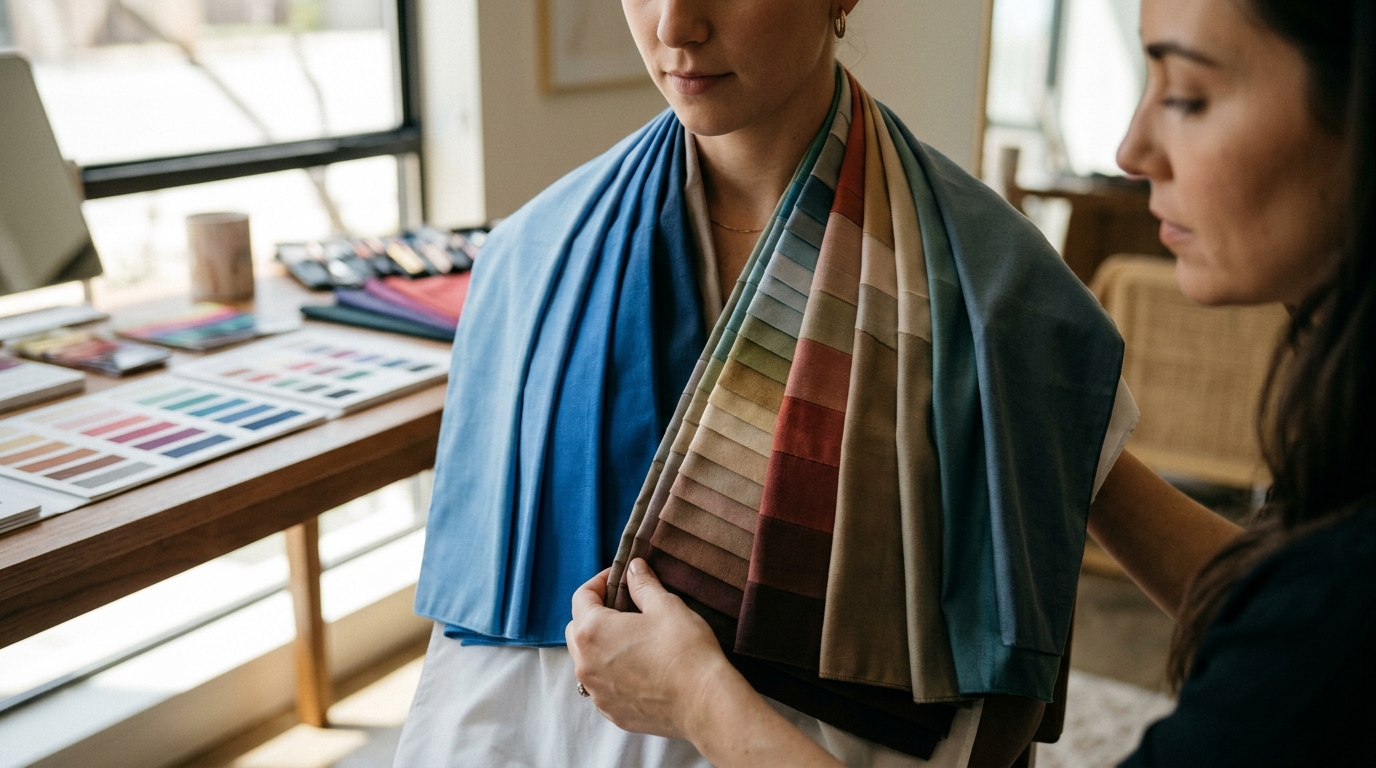
23-season color analysis is significantly more accurate than the basic four-season method because it evaluates specific color attributes like value, chroma, and temperature. The four-season system groups people into broad categories, which often leads to mixed results. In contrast, the 23-season system isolates your exact seasonal subtype, providing a precise palette that matches your unique coloring. This level of detail ensures that your clothing and makeup choices align perfectly with your natural features.
The Difference in Granularity
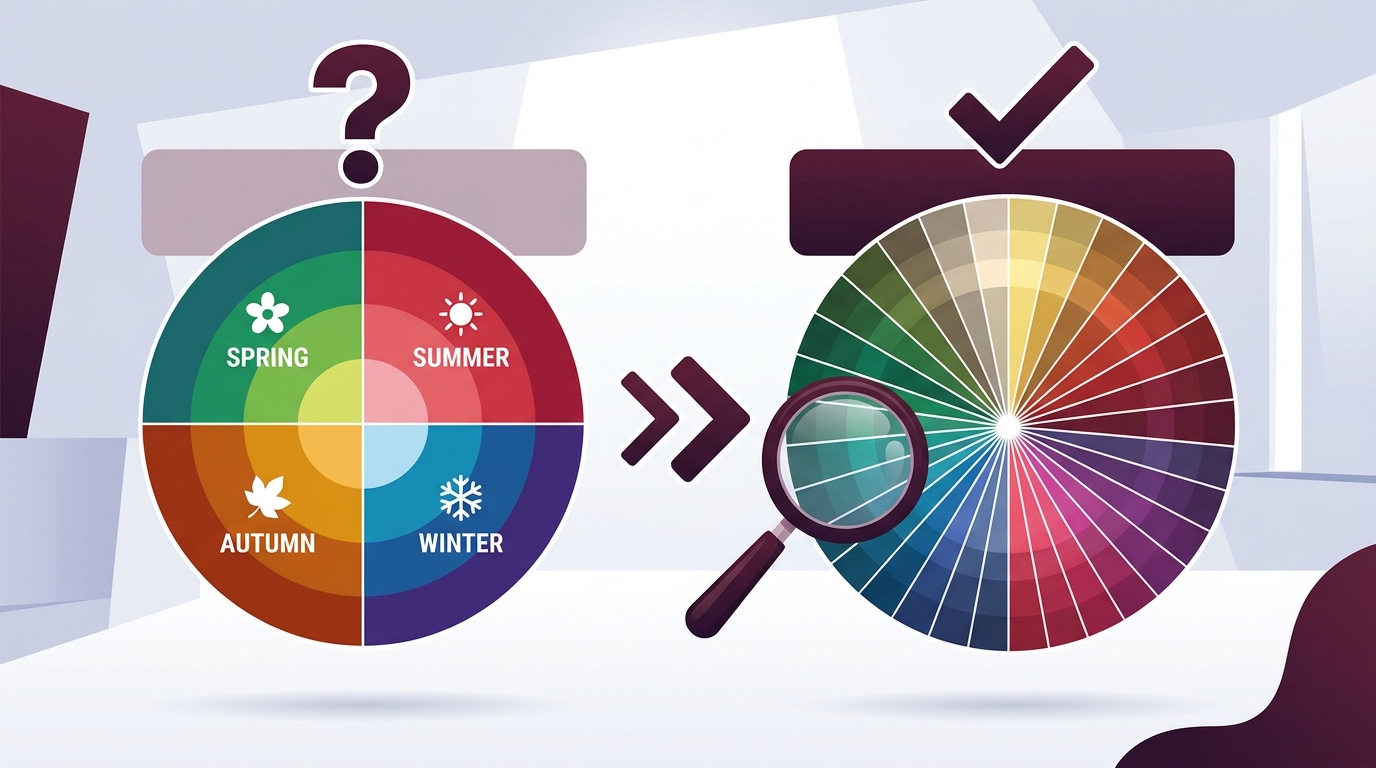
The primary distinction between the two systems lies in their level of detail. The traditional four-season method categorizes individuals into Spring, Summer, Autumn, or Winter. This broad grouping can be problematic because it lumps together people with vastly different color characteristics. For example, a Deep Autumn and a Light Autumn both fall under the Autumn umbrella, yet their optimal palettes are quite different. The 23-season system, developed by the International Image Institute, breaks these four seasons into smaller, more specific sub-seasons. This allows for a much more tailored approach to personal styling.
By using a finer grid, the 23-season method accounts for the subtle variations in human coloring that the four-season system ignores. It considers the interplay between warmth, coolness, brightness, and depth. This means that instead of receiving a generic palette, you get a specific set of colors that are scientifically aligned with your skin, hair, and eye tones. The result is a higher degree of accuracy in identifying which shades truly complement your appearance.
Evaluating Color Attributes
Accuracy in color analysis depends on how many variables are measured. The four-season method primarily looks at overall warmth and coolness. It is a binary approach that often misses the nuances of individual coloring. The 23-season system, however, evaluates multiple attributes simultaneously. It looks at value, which is how light or dark your coloring is. It also examines chroma, or the intensity of your colors. Finally, it assesses temperature, determining if your features lean warm or cool.
When these attributes are analyzed together, the resulting palette is far more precise. For instance, two people might both be classified as Summers in the four-season system. One might be a Soft Summer, while the other is a True Summer. Their palettes will differ in brightness and saturation. The 23-season method captures these differences, ensuring that the colors recommended are not just generally flattering, but specifically optimal for your unique combination of traits. This multi-attribute analysis is the key to its superior accuracy.
Practical Implications for Styling
The accuracy of the analysis directly impacts how you use your palette in daily life. With the four-season method, you might find that some colors in your palette work well while others do not. This inconsistency can be frustrating and confusing. The 23-season system reduces this trial and error by providing a more defined set of colors. You know exactly which shades to prioritize and which to avoid. This clarity makes shopping and styling much more efficient.
For example, if you are a Light Spring, the 23-season system will highlight soft, bright pastels. It will also warn you against deep, muted tones that might wash you out. In the four-season system, you might be given a broader Spring palette that includes some of these darker shades. The precision of the 23-season method helps you make better decisions with your wardrobe and makeup. It turns color analysis from a general guideline into a specific tool for personal expression.
Understanding the Limitations
While the 23-season system is more accurate, it is not without its limitations. Color analysis is a visual assessment based on professional judgment and color theory. It is not a scientific measurement in the strictest sense. Factors like lighting, photography quality, and even your current health can affect how colors appear on your skin. Therefore, while the 23-season method is more precise, it still relies on the skill and experience of the analyst.
It is important to approach color analysis with realistic expectations. The goal is to provide guidance, not absolute rules. You may still find that you prefer a color outside your palette for personal reasons. The 23-season system offers a higher degree of accuracy, but it is a tool to help you understand your coloring, not a rigid set of constraints. Understanding these limitations helps you use the results effectively and enjoy the process of discovering your best colors.
Key Takeaways
- The 23-season system offers greater granularity than the four-season method by breaking seasons into specific sub-types.
- Accuracy is improved by evaluating multiple attributes such as value, chroma, and temperature simultaneously.
- The four-season method can be too broad, leading to palettes that include colors that do not suit all individuals within a season.
- 23-season analysis provides a more precise palette, reducing the need for trial and error in shopping and styling.
- While more accurate, color analysis is a visual assessment and can be influenced by external factors like lighting and health.
- The 23-season system is a valuable tool for understanding your unique coloring and making informed style choices.
Frequently Asked Questions
Is 23-season color analysis more accurate than four-season?
Yes, the 23-season system is generally considered more accurate because it accounts for more specific color attributes. It provides a finer level of detail than the broad categories of the four-season method.
What is the main difference between the two systems?
The main difference is granularity. The four-season method uses four broad categories, while the 23-season system uses 23 specific sub-seasons to capture individual variations in coloring.
Does the 23-season system use different palettes?
Yes, each of the 23 sub-seasons has its own unique palette. This allows for more precise color recommendations compared to the shared palettes of the four-season system.
Can I use the four-season method if I am not sure about 23-season?
You can, but you may find the results less precise. The 23-season method is designed to provide a more tailored experience, which is often preferred for its accuracy.
How does lighting affect color analysis accuracy?
Lighting can significantly affect how colors appear on your skin. Professional analysts use controlled lighting to ensure the most accurate assessment, which is why in-person sessions are often recommended. according to Noninvasive skin tightening
Is color analysis a science?
Conclusion
The 23-season color analysis method offers a significant advantage in accuracy over the traditional four-season system. By evaluating specific attributes like value, chroma, and temperature, it provides a more precise and personalized palette. This level of detail helps you make better styling decisions and reduces the guesswork involved in choosing colors. If you are looking for a more tailored and accurate color analysis, the 23-season system is the preferred choice. Book your in-person session at ATX Color Studio to experience the precision of this advanced method.