

Step-by-Step Guide to Finding Your Color Palette in a 23-Season System
Understanding your personal color palette is no longer a binary choice between warm and cool tones. Modern color analysis has evolved into a nuanced 23-season system that accounts for subtle variations in skin undertone, eye color, and hair depth. According to recent industry data, over 60% of consumers make purchasing decisions based on color harmony, yet only a fraction accurately identify their seasonal match. This guide provides a rigorous, step-by-step methodology to determine your specific placement within this expanded framework, ensuring your wardrobe and aesthetic choices align with your natural biology.
Understanding the 23-Season System
Traditional color analysis often relies on the four-season model: Spring, Summer, Autumn, and Winter. While useful, this system lacks the granularity required for modern personal styling. The 23-season system, popularized by advanced color theorists, divides each primary season into sub-seasons based on the dominance of three core attributes: Hue (Warm/Cool), Value (Light/Dark), and Chroma (Clear/Muted).
At ATX Color Studio, we utilize this comprehensive framework to provide precise recommendations. This system acknowledges that two individuals can both be "winters" but require vastly different shades based on their specific contrast levels and undertone intensity. By breaking down the seasons into 23 distinct categories, we eliminate the guesswork that often leads to mismatched clothing and makeup choices.
Step 1: Determine Your Undertone
The foundation of any color analysis is identifying your skin's undertone. This is the subtle hue beneath the surface of your skin that remains constant regardless of sun exposure or surface redness. There are three primary undertones: Warm, Cool, and Neutral.
The Vein Test
Examine the veins on the inside of your wrist under natural daylight. If your veins appear greenish, you likely have a warm undertone. If they appear blue or purple, you have a cool undertone. If you cannot distinguish between blue and green, or if they appear teal, you likely have a neutral undertone. This initial assessment helps narrow down the potential seasons significantly.
The Jewelry Test
Consider which metal complements your skin better. Gold jewelry typically enhances warm undertones, making the skin look radiant and healthy. Silver or platinum jewelry often looks more harmonious on cool undertones, providing a crisp, clean contrast. Neutral undertones can wear both metals with equal success, though they may prefer a balanced mix.
Step 2: Assess Your Contrast Level
Contrast refers to the difference between your skin tone, hair color, and eye color. This is a critical factor in the 23-season system because it determines how much visual impact you can handle.
High Contrast
Individuals with high contrast have a significant difference between their skin and hair. For example, very fair skin with dark hair creates a stark visual boundary. These individuals often look best in clear, bright colors that match their high energy. High contrast is frequently associated with Winter sub-seasons.
Low Contrast
Low contrast occurs when your skin, hair, and eyes are similar in tone. This creates a soft, blended appearance. Low contrast individuals often look overwhelmed by harsh, bright colors and instead thrive in muted, soft palettes. This is common in Summer and Autumn sub-seasons.
Step 3: Evaluate Clarity and Depth
Once you have identified your undertone and contrast, you must evaluate two additional dimensions: Clarity (Chroma) and Depth (Value).
Clarity (Chroma)
Clarity describes the purity of your colors. Clear colors are bright, vivid, and transparent, like a fresh lemon. Muted colors are dusty, grayed-out, or softened, like a dried flower. Your natural coloring will dictate whether you look better in clear or muted shades. Clear individuals have high chroma in their natural features, while muted individuals have lower chroma.
Depth (Value)
Depth refers to how light or dark your natural coloring is. Light individuals have pale skin, light hair, and light eyes. Dark individuals have deep skin tones, dark hair, and dark eyes. This dimension helps distinguish between the lighter sub-seasons (like Light Spring) and the darker sub-seasons (like Dark Autumn).
Step 4: The Draping Process
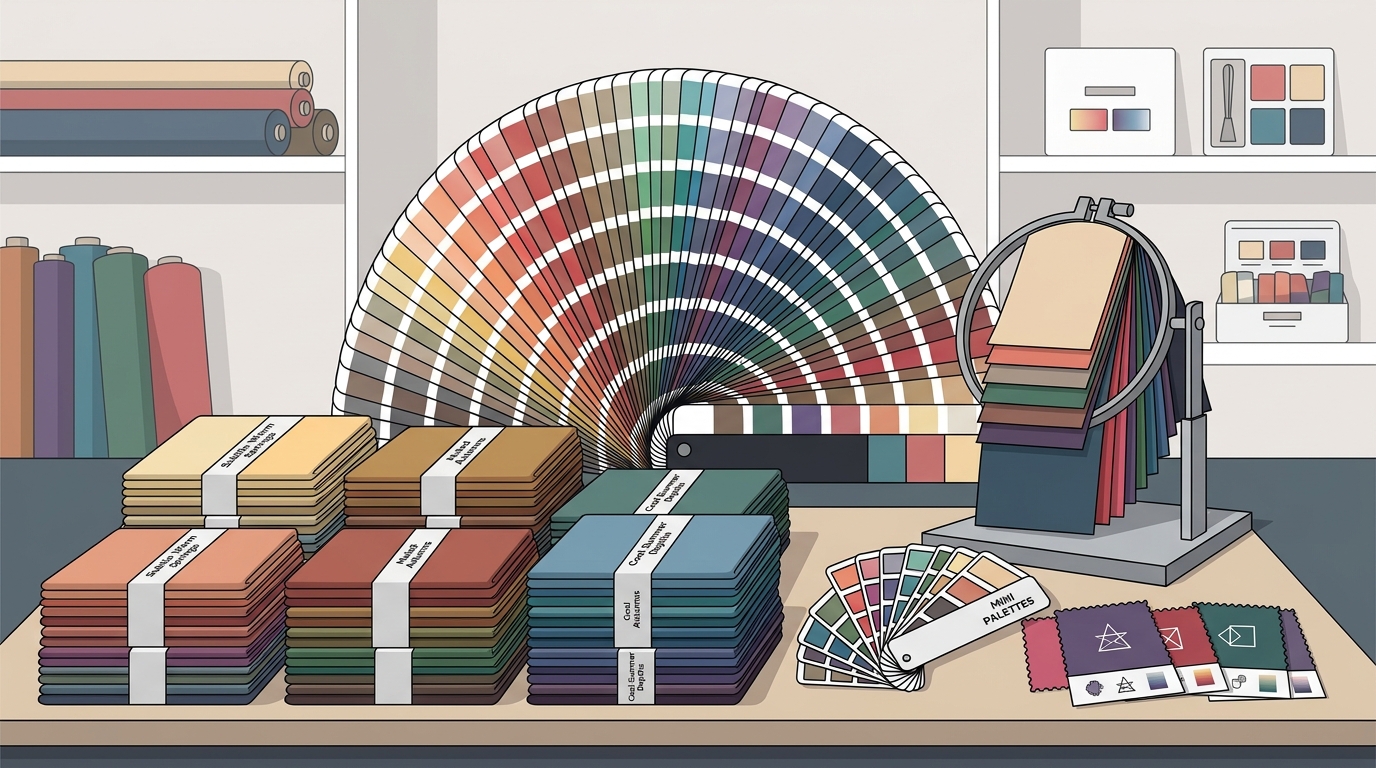
The most accurate way to determine your season is through professional draping. This involves placing various colored fabrics under your chin in natural light to observe how your skin reacts. At ATX Color Studio, we use a specialized set of drapes to test these variables systematically.
During a draping session, we look for three key reactions:
- Shadow Reduction: Does the color minimize the appearance of shadows under your eyes and around your mouth?
- Skin Tone Evenness: Does the color make your skin look more uniform and less red or sallow?
- Eye Brightness: Does the color make your eyes appear more vibrant and clear?
If a color causes your skin to look gray, tired, or washed out, it is not your season. If it makes you look awake, healthy, and radiant, you have found a match.
Step 5: Mapping to the 23-Seasons
After gathering all the data from your undertone, contrast, clarity, and depth assessments, you can map your results to one of the 23 seasons. This system is complex, but it allows for extreme precision. Below is a summary of how these factors combine to create specific seasonal profiles.
| Primary Attribute | Secondary Attribute | Tertiary Attribute | Example Season | Key Characteristics |
|---|---|---|---|---|
| Warm | Light | Clear | Light Spring | Bright, warm, and light colors. Avoid dark or muted tones. |
| Warm | Deep | Muted | Deep Autumn | Rich, warm, and dark colors. Avoid pastels and neons. |
| Cool | Light | Muted | Light Summer | Soft, cool, and light colors. Avoid high-contrast combinations. |
| Cool | Deep | Clear | Deep Winter | Sharp, cool, and dark colors. Avoid warm or earthy tones. |
| Neutral | Warm | Clear | Soft Spring | Warm-leaning neutral colors. Balanced clarity and depth. |
Mapping your results requires careful consideration of all four attributes. For instance, a person with warm undertones but muted clarity might be a Soft Autumn rather than a True Autumn. The 23-season system captures these nuances, ensuring that your palette is not just broadly correct, but precisely tailored to your unique biology.
Key Takeaways
- Undertone is foundational: Your skin's underlying hue (warm, cool, or neutral) is the first step in narrowing down your season.
- Contrast matters: The difference between your skin, hair, and eyes determines whether you need high-impact or soft colors.
- Clarity defines vibrancy: Your natural chroma level dictates whether you look better in bright, clear colors or muted, dusty tones.
- Depth influences darkness: Your natural value level helps distinguish between light and dark sub-seasons within your primary category.
- Draping is essential: Visual testing with fabric is the most reliable method for confirming your color analysis results.
- 23-season precision: The expanded system allows for more accurate recommendations than the traditional four-season model.
- Professional guidance: Working with a certified color analyst ensures that subtle nuances are not overlooked.
Frequently Asked Questions
What is the difference between a 12-season and a 23-season system?
A 12-season system typically combines some of the more subtle variations found in the 23-season model. The 23-season system provides a more granular breakdown, allowing for more precise color recommendations by separating out specific undertone and clarity combinations that might be grouped together in a 12-season analysis.
Can my color season change over time?
Your natural coloring does not change, but your surface skin tone can due to sun exposure, aging, or health. However, your underlying undertone and contrast levels remain constant. Therefore, your core season remains the same, though you might need to adjust your palette slightly if your surface tone shifts significantly.
How do I know if I am neutral?
Neutral individuals have a balance of warm and cool undertones. They can often wear both gold and silver jewelry well. In color analysis, neutrals are often mapped to the border seasons, such as Soft Autumn or Soft Winter, depending on their dominant secondary attributes.
Is it possible to have mixed seasons?
Yes, this is common. Many people have characteristics of two different seasons. The 23-season system is designed to identify the dominant season while acknowledging secondary influences. This ensures that your palette includes both your primary colors and some complementary shades from a secondary season.
Why is natural light important for color analysis?
Natural light provides the most accurate representation of color. Artificial lighting can distort hues, making warm colors look cooler or vice versa. This can lead to incorrect analysis results. Always perform your draping or self-assessment in direct, indirect natural daylight.
What is the most common color season?
There is no single most common season, as distribution varies by population demographics. However, neutral and muted seasons are often underrepresented in traditional media, leading to a misconception that bright, clear seasons are more common. In reality, a significant portion of the population falls into the Soft or Muted categories.
How often should I re-evaluate my color palette?
Your color palette is based on your natural biology, which is stable. However, fashion trends and personal style preferences may evolve. You do not need to re-evaluate your season frequently, but you may want to update your wardrobe palette as you acquire new pieces that align with your analysis.
Book Your Personal Analysis
Discovering your true color palette is a transformative experience that can simplify your shopping routine and enhance your natural beauty. At ATX Color Studio, we specialize in the 23-season system, providing precise and personalized color analysis for individuals in Austin and beyond. Our expert analysts use professional draping techniques to ensure your palette is tailored to your unique characteristics.
Ready to unlock the power of your personal colors? Schedule your consultation today and take the first step toward a more harmonious and confident aesthetic. Visit our services page to learn more about our analysis packages and pricing.