

Choosing the right virtual color analysis requires evaluating photo protocols, analytical depth, and consultant expertise. A high-quality session uses advanced systems like 23-Season analysis to provide precise, actionable results. This guide details the five critical components of a professional virtual consultation, from preparation to long-term support.
Photo Preparation Guidelines
Photo preparation is the foundation of any accurate virtual color analysis. The quality of your images directly determines the accuracy of the results. A professional service will provide detailed instructions on lighting, angles, and attire before you submit your photos.
Lighting and Environment
Natural, diffused daylight is the gold standard for color analysis photography. Harsh shadows or artificial lighting can distort skin tone and undertone. You should be positioned in front of a window with indirect light, avoiding direct sun or overhead bulbs.
Attire and Grooming
Arriving without makeup, tinted moisturizer, or colored contact lenses is essential. These products alter the natural appearance of your skin and eyes. A reputable studio will explicitly state these requirements to ensure a neutral baseline for analysis.
Image Quality and Angles
High-resolution images are necessary to see subtle details in your coloring. You will typically need full-body, upper-body, and close-up facial shots. The consultant should review these images for clarity and may request replacements if the lighting or focus is insufficient.
Color Analysis Methodology
Basic vs. Advanced Systems
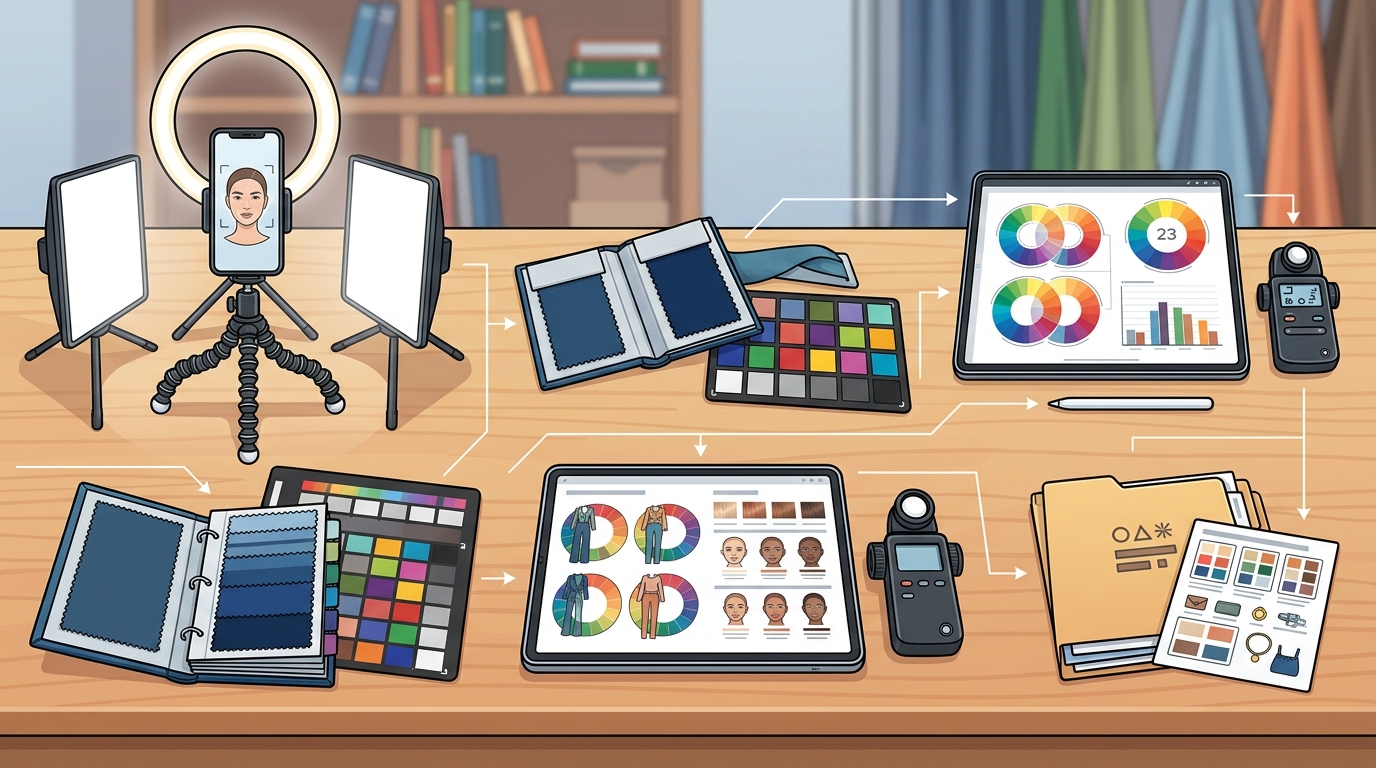
Traditional four-season analysis is a starting point, but it lacks granularity. Advanced systems, such as the 23-Season or 35-Palette systems, break down color into specific sub-seasons. This allows for a much more tailored palette that reflects your unique combination of undertone, value, and intensity.
The Draping Process
Virtual draping involves digitally placing color swatches against your photos. The consultant evaluates how your skin reacts to different hues. This systematic comparison reveals which colors harmonize with your natural coloring and which ones clash.
Professional Interpretation
Color analysis involves professional judgment based on the system used and the specific conditions of your photos. Different analysts may use different tools or lighting environments, which can influence the final result. A transparent service will explain their specific methodology and the factors that contribute to their assessment.
Consultant Credentials
Not all color analysts are trained to the same standard. Verifying the credentials of your consultant ensures you are receiving a professional service. Look for specific training in advanced color systems and a track record of client experience.
Training and Certification
Master-level training indicates a deep understanding of color theory and application. At ATX Color Studio, the lead analyst is double master trained in 23-Season Color Analysis. This level of expertise ensures that the analysis is thorough and based on proven techniques.
Experience and Portfolio
Experience matters. A consultant who has analyzed over 1,000 clients has encountered a wide variety of skin tones and coloring. This experience allows them to make more accurate judgments and provide better guidance. Check for testimonials or a portfolio that demonstrates their range of work.
Transparency and Ethics
A professional studio will be transparent about their methods and limitations. They should clearly state that color analysis is an educational and styling service, not a medical or scientific test. Look for a studio that provides clear disclaimers and ethical guidelines regarding their services.
Personalized Deliverables
The value of a virtual color analysis lies in the tools you receive afterward. A comprehensive service provides tangible resources that help you apply your results in daily life. These deliverables should be specific to your unique palette.
Physical and Digital Palettes
Receiving a physical color swatch book allows you to see your colors in real life. Digital access, such as through an app, provides a convenient reference for shopping and styling. Having both formats ensures you can use your palette in various situations.
Styling and Beauty Guidance
Your deliverables should include specific recommendations for clothing, makeup, and hair. This includes guidance on which metals to wear, which jewelry styles suit you, and how to coordinate your wardrobe. The goal is to give you a system for making confident choices.
Wardrobe Integration
A good service helps you integrate your new palette into your existing wardrobe. You will learn how to style pieces that are outside your palette, such as black or white, by adjusting placement and contrast. This practical approach ensures you do not have to discard your current clothes.
Follow Up Support
The consultation is just the beginning. Ongoing support helps you navigate the transition to your new color palette. A professional service provides resources and access to the consultant for questions that arise after the session.
Consultation Follow-Up
A follow-up call allows you to ask questions and clarify any points from the initial session. This is a valuable opportunity to discuss specific wardrobe items or styling challenges. It ensures you fully understand and can apply your results.
Resource Library
Access to a library of guides and tips helps you stay informed. This might include articles on seasonal palettes, jewelry selection, or makeup techniques. These resources provide ongoing value and keep you engaged with your color story.
Community and Updates
Joining a newsletter or community connects you with the studio for future updates. You will receive color tips, style inspiration, and information about new services or events. This keeps you in the loop and provides continued support.
Key Takeaways
- Photo preparation is critical; use natural light and avoid makeup and colored contacts.
- Advanced systems like 23-Season analysis provide more precise results than basic four-season methods.
- Verify consultant credentials, looking for master-level training and significant client experience.
- Personalized deliverables should include both physical and digital palettes for practical use.
- Follow-up support, such as a Zoom call, helps you integrate your results into daily life.
- Color analysis is a professional interpretation, not a scientific test; results may vary by analyst.
- Look for transparency in methodology and clear disclaimers regarding the nature of the service.
- Practical guidance on styling existing wardrobe items is a hallmark of a high-quality service.
Frequently Asked Questions
What is the difference between 23-Season and 4-Season color analysis?
Do I need to buy new clothes after a color analysis?
No, you do not need to discard your existing wardrobe. Color analysis provides a guide for styling. You can learn to place your best colors near your face and use other colors strategically to create harmony.
How accurate is virtual color analysis compared to in-person?
Virtual analysis can be highly accurate if the photos are of high quality and taken in proper lighting. The consultant relies on your submitted images, so following preparation instructions is key to getting reliable results.
What should I wear for my virtual color analysis photos?
Wear simple, solid-colored clothing that does not distract from your face. Avoid patterns, logos, or colors that are too close to your skin tone. The goal is to provide a clear view of your natural coloring.
Can I wear makeup during the photo session?
No, you should not wear makeup, tinted moisturizer, or colored contact lenses. These products alter your natural skin tone and eye color, which can lead to an inaccurate analysis. Arrive with a clean, bare face.
What kind of support do I get after the session?
Most professional services include a follow-up call and access to digital resources. This allows you to ask questions and receive ongoing guidance as you implement your new color palette.
Is color analysis a scientific test?
No, color analysis is a professional interpretation based on visual observation and color theory. It is not a medical or scientific test. Results reflect the analyst's judgment and the specific system used.
How do I choose the right consultant?
Look for a consultant with advanced training, such as master-level certification in a detailed system. Check their experience, read reviews, and ensure they provide clear preparation instructions and comprehensive deliverables.
Conclusion
Choosing a virtual color analysis requires careful consideration of preparation, methodology, and support. By focusing on these key areas, you can ensure you receive a high-quality, personalized service. ATX Color Studio offers a comprehensive virtual experience that combines advanced 23-Season analysis with practical, long-term support. To begin your journey, to schedule your session.